The Promise Was Beautiful
The research democratization movement started with a genuinely good insight: decisions made without user evidence are risky, and concentrating all research in a small central team creates bottlenecks that starve the organization of insight.
The prescription followed logically: give everyone the ability to do research. Train product managers to run interviews. Enable designers to conduct usability tests. Let engineers observe user behavior directly. More research, more evidence, better decisions.
Organizations embraced this. Atlassian, Spotify, and dozens of other product-led companies built frameworks for "everyone a researcher." The research operations community developed templates, playbooks, and training programs to scale research beyond the dedicated team.
Five years into this experiment, we have enough evidence to evaluate the results. And the results are... complicated.
What Actually Happened
In many organizations, democratization produced exactly the bottleneck relief it promised. Product teams no longer waited six weeks for a central research team to get to their study. Decisions that previously relied on gut feeling now had at least some user evidence behind them. The volume of research activity increased dramatically.
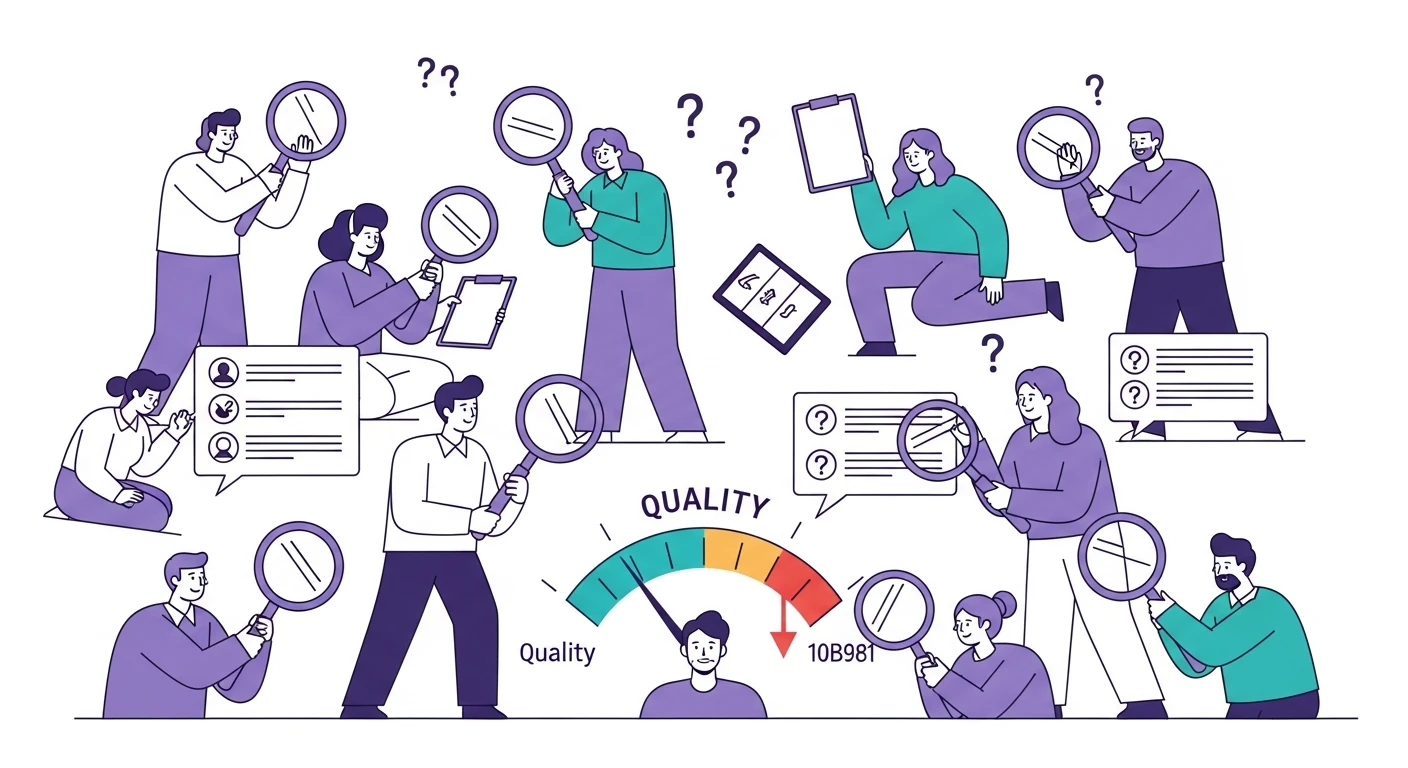
But volume is not quality. And the quality problems emerging from democratized research are systematic, not anecdotal.
Confirmation bias industrialized. When product managers run their own research, they bring their existing hypotheses into the room. Without training in neutral interviewing techniques, they ask leading questions, selectively attend to confirming evidence, and unconsciously frame findings to support decisions they already wanted to make. This is not malice -- it is human cognition operating without methodological guardrails.
A trained researcher knows how to bracket their assumptions. They have practiced neutral probing. They understand that their first interpretation is probably contaminated by their priors. An untrained PM doing their fifth-ever interview has none of these defenses against their own cognitive biases.
Methodology cargo-culting. Democratization spreads practices through imitation rather than understanding. A PM watches a researcher run an interview once, then replicates the surface behaviors without understanding the methodological principles underneath. They ask open-ended questions (good) but fail to probe for specificity (bad). They record the session (good) but code only for pre-existing categories (bad). They write up findings (good) but conflate individual anecdotes with patterns (bad).
The result is research that looks professional but lacks the rigor that makes findings trustworthy. It has the aesthetic of good research without the epistemological substance.
Sample convenience masquerading as sampling strategy. Trained researchers agonize over sampling because they understand how sample composition determines what you can and cannot conclude. Democratized researchers typically recruit whoever is easiest to reach -- existing customers, internal employees, people who respond to the first recruitment email.
This produces findings that systematically over-represent engaged users, early adopters, and people with time to participate in research. The voices most likely to reveal unmet needs -- non-users, churned customers, marginalized populations -- are precisely the voices absent from convenience samples.
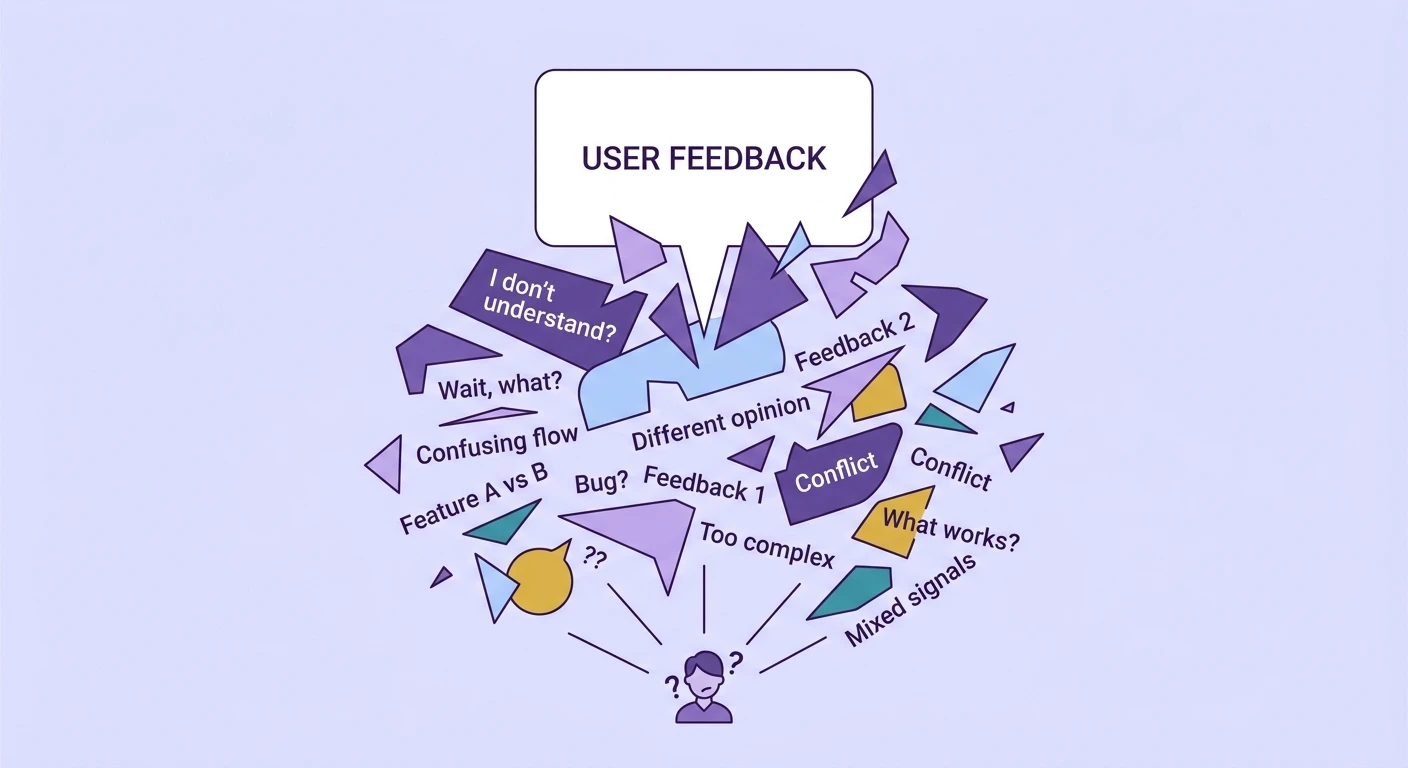
Insight inflation. When research volume increases but quality decreases, organizations develop a specific pathology: they have more "insights" than ever, but the insights conflict, contradict each other, and provide no clear direction. Teams cite research to support opposing positions. The insight repository becomes a choose-your-own-adventure where any conclusion can be justified by some study.
This is worse than having no research. At least with no research, teams know they are guessing. With bad research, teams believe they have evidence when they actually have noise.
The Root Cause Is Not Access
The obvious conclusion -- "democratization was a mistake, centralize research again" -- is wrong. The problem is not that non-researchers have access to research methods. The problem is that the tools and processes designed for trained researchers were handed to untrained practitioners without the scaffolding that makes them work.
Consider an analogy: giving everyone access to a professional camera does not make everyone a photographer. But giving everyone access to a smartphone camera with computational photography -- intelligent exposure, auto-focus, scene detection, portrait mode -- actually does produce dramatically better photos from untrained users. The tool compensates for missing expertise.
Research tooling has historically been the professional camera. NVivo, Dovetail, and traditional analysis tools assume trained users who understand methodology. They provide powerful capabilities without methodological scaffolding. They are designed to amplify existing expertise, not substitute for missing expertise.
The Real Democratization Lever
Genuine research democratization requires tools that embed methodological rigor into the workflow itself -- not just access to methods, but guidance in applying them correctly.
This means:
Bias detection at the point of creation. When a product manager writes interview questions, the tool should flag leading language, double-barreled questions, and assumption-loaded framing before the interview happens. Not as a post-hoc audit, but as real-time guardrails that prevent bad methodology from producing bad data.
Analysis scaffolding that prevents premature pattern-matching. When someone reviews qualitative data, the tool should enforce bottom-up coding before top-down categorization. It should surface disconfirming evidence alongside confirming evidence. It should flag when conclusions rest on insufficient data points.
Automated consistency checking. When multiple people across an organization run similar studies, the tool should identify methodological inconsistencies, sampling gaps, and conflicting findings -- not after the fact in a quarterly research review, but in real-time as studies are designed and executed.
Contextual methodology guidance. Instead of requiring everyone to complete a research methods course (which they will forget within weeks), embed the relevant guidance at each decision point. Writing a screener? Here is why demographic diversity matters. Designing tasks? Here is how to avoid priming effects. Interpreting data? Here is why that sample size limits your conclusions.
AI as Methodology Guardrail
This is where AI-assisted research tools become not just efficient but genuinely democratizing. Not because they replace human judgment -- that framing misses the point -- but because they can provide the methodological scaffolding that trained researchers carry in their heads.
A trained researcher does not need a tool to tell them their question is leading. They hear it as they formulate it. But an untrained PM absolutely needs that feedback, delivered in the moment, without requiring them to first complete a semester of research methods coursework.
AI can provide:
- Real-time interview guide review with specific, actionable feedback on question quality
- Automated initial coding that surfaces patterns without the analyst's confirmation bias
- Cross-study synthesis that identifies when new findings contradict or extend existing evidence
- Sampling gap analysis that flags demographic or behavioral blind spots before they compromise conclusions
- Confidence calibration that explicitly states what you can and cannot conclude from a given dataset
None of this replaces the strategic judgment of a trained researcher. What it does is raise the floor -- ensuring that even novice researchers produce work that meets minimum methodological standards rather than inadvertently generating misleading evidence.
The Uncomfortable Implication
If this analysis is correct, most organizations running "democratized research" are currently generating a significant volume of methodologically compromised insight. Not all of it. Not always. But enough that the collective evidence base is less trustworthy than anyone wants to admit.
The fix is not to revoke access. It is not to go back to the bottlenecked central-team model that democratization rightly challenged. It is to acknowledge that access without scaffolding produces predictably bad outcomes, and to invest in the tooling and infrastructure that makes access actually productive.
Research democratization is not "give everyone a survey tool and wish them luck." Real democratization is giving everyone the ability to produce rigorous insight -- which requires tools sophisticated enough to compensate for missing training, not just tools simple enough for anyone to use.
The difference between those two things is the difference between democratization that works and democratization that quietly corrodes your decision-making while feeling productive the entire time.
What To Do About It
If you are a research leader watching democratization unfold in your organization:
- Audit the actual quality of democratized research output. Not whether studies are happening, but whether findings are methodologically sound. Most organizations measure research volume, not research quality.
- Identify the failure patterns. Where specifically is quality breaking down? Question design? Sampling? Analysis? Interpretation? Each failure mode requires different intervention.
- Invest in tooling that scaffolds, not just enables. The tools your democratized researchers use should make it harder to produce bad research, not just easier to produce research.
- Redefine the central team's role. Instead of doing all research, the central team becomes a quality function -- setting standards, reviewing methodology, building the systems that make distributed research reliable.
- Accept that some research should not be democratized. Foundational studies, sensitive populations, high-stakes strategic research -- these still benefit from dedicated expertise. Democratize the routine; protect the complex.
The goal was always better decisions through more evidence. That goal is right. But evidence quality matters more than evidence volume, and the next phase of research democratization needs to optimize for both.