The Invisible Frame
Researchers spend weeks designing studies, conducting interviews, and analyzing data. Then they spend an afternoon choosing how to present what they found. That afternoon decision -- slide deck or report, video clip or quote, journey map or spreadsheet -- shapes stakeholder perception more than the quality of the research itself.
This is not a minor presentation concern. It is a systematic bias in how research influences product decisions.
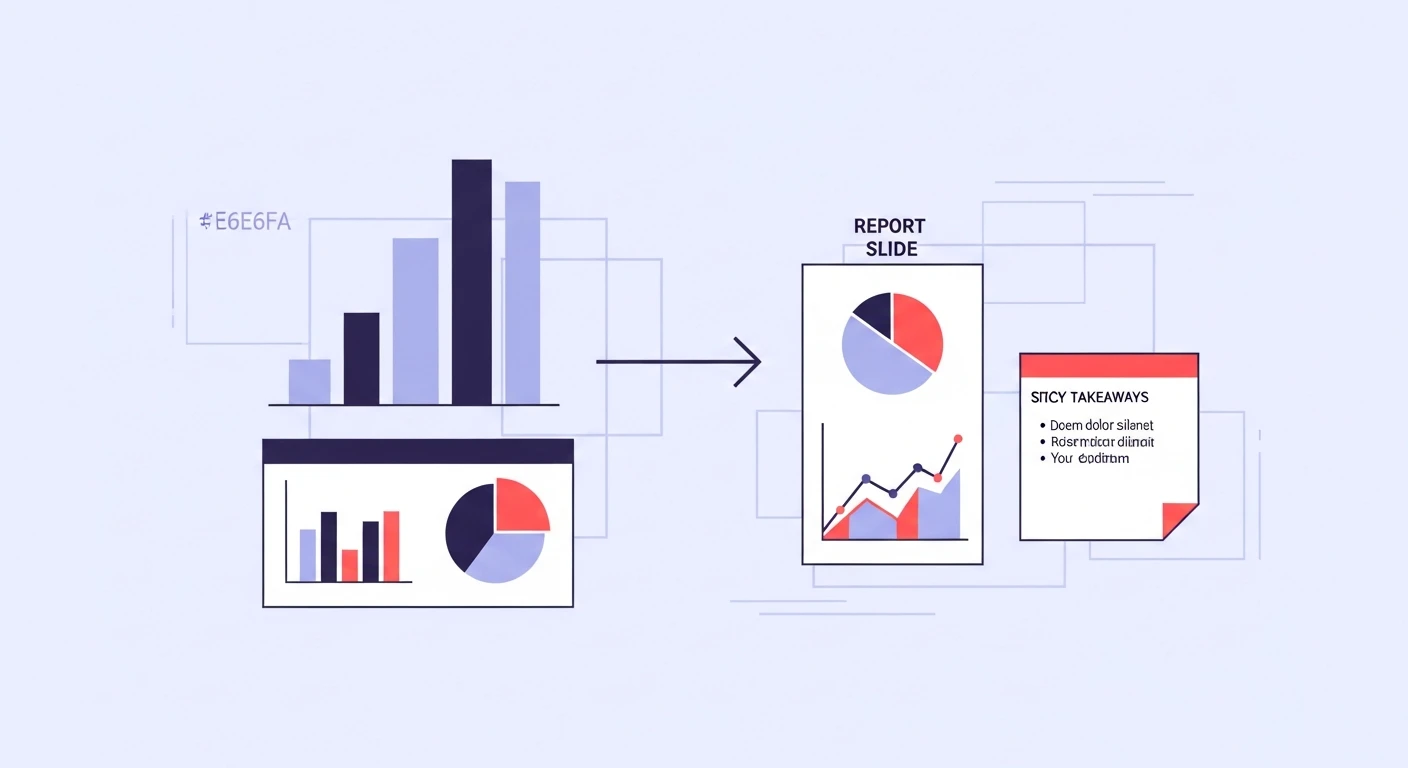
The medium is not neutral. A finding embedded in a polished slide deck feels more credible than the same finding in a Slack message. A participant quote in a video clip generates more emotional response than the same words transcribed. A journey map makes process problems visible while hiding individual variation. Every format amplifies certain dimensions of your data while suppressing others.
How Format Shapes Belief
Slide decks create false certainty. The structure of slides -- headline claim, supporting bullet points, clean visual -- imposes a confidence that raw data rarely warrants. Stakeholders experience slide presentations as conclusions, not as invitations to interpret. The format itself discourages questioning because the medium signals "this has been figured out."
Written reports favor nuance but lose attention. Detailed reports allow researchers to convey uncertainty, context, and alternative interpretations. But stakeholders rarely read them completely. The executive who reads the summary and skips the methodology section walks away with a simplified version of your findings that may contradict your actual conclusions.
Video clips create false representativeness. A single compelling participant video generates disproportionate influence. Stakeholders remember the person, not the pattern. One articulate participant can override ten data points because the medium makes individual stories vivid while making aggregate patterns abstract.
Journey maps privilege process over emotion. When you map findings to a journey framework, process friction becomes visible but emotional experience flattens. Stakeholders see "user struggles at step 3" but miss "user feels humiliated by the error message." The format decides what counts as a finding.
The Selective Amplification Problem
Every research artifact performs what we might call selective amplification -- it makes certain types of findings more perceivable while rendering others invisible.
Consider a study that reveals three things: a usability friction in onboarding, an emotional trust barrier during checkout, and a conceptual mismatch in how users understand your pricing model.
Presented as a usability audit document, the onboarding friction dominates. Presented as a participant highlight reel, the emotional barrier dominates. Presented as a concept map, the pricing mismatch dominates. Same data, same researcher, same quality of analysis -- but the deliverable format pre-selects which finding becomes the "main" one.
This connects directly to how the translation problem between researchers and designers operates. Insights do not just die in handoff because of communication failure -- they die because the artifact format was mismatched to the type of insight being conveyed.
Why Researchers Default to Familiar Formats
Most research teams develop format habits. They always make slide decks. Or they always write Notion pages. Or they always do video highlight reels.
These habits form for practical reasons: templates exist, stakeholders expect them, the team knows how to produce them quickly. But habitual formats create habitual blind spots. If you always present as slides, you always impose false certainty. If you always do video clips, you always over-weight individual stories.
The research operations challenge here mirrors what happens with tool sprawl killing insight velocity. Teams optimize their tooling for production speed rather than for insight fidelity, and the format defaults of their tools shape what gets communicated.
Format-Aware Research Communication
The solution is not to find one "correct" format. It is to become deliberate about format selection based on the nature of your findings.
Match format to insight type:
- Process problems → journey maps, flow diagrams
- Emotional experiences → video clips, direct quotes with context
- Conceptual misunderstandings → concept maps, participant mental models
- Behavioral patterns → annotated data tables, frequency analysis
- Strategic implications → narrative memos, one-page briefs
Use multiple formats for the same study. Present findings in at least two different formats to different stakeholder groups, or combine formats in a single presentation. This prevents any single format from over-determining which findings dominate.
Name the amplification explicitly. When presenting, tell stakeholders what the format emphasizes and what it suppresses. "This journey map shows process friction clearly but does not convey the emotional intensity participants expressed" is a simple disclosure that counteracts format bias.
Rotate formats deliberately. If your team always produces slide decks, mandate that every third study uses a different deliverable format. This prevents habitual blind spots from compounding across studies.
The Stakeholder Expectation Trap
Stakeholders often request specific formats: "Just give me the slides" or "Can you put together a one-pager?" These requests are reasonable but carry implicit bias. The stakeholder who wants slides wants certainty. The stakeholder who wants a one-pager wants simplicity.
Honoring format requests without adjustment means letting stakeholders pre-determine which aspects of your research get communicated. This is where the attention economy of research findings intersects with artifact design -- stakeholders have limited attention, and the format you choose allocates that attention for them.
The professional move is to deliver the requested format while supplementing it: "Here are the slides you asked for, and I have included a two-minute video of the participant moment that the slides cannot convey."
Connecting Format to Decision Context
The best format choice depends not just on what you found but on what decision needs to be made.
Design decisions need specificity: annotated screenshots, flow diagrams, direct participant quotes about specific interactions. Abstract formats (strategy memos, thematic summaries) lose the detail designers need.
Strategy decisions need patterns: thematic analysis, segment comparisons, trend data. Specific formats (individual video clips, single-user journeys) can mislead because they make individual cases feel like patterns.
Prioritization decisions need severity signals: frequency data, impact ratings, confidence levels. Narrative formats (research stories, journey maps) can make every finding feel equally important.
As AI continues reshaping qualitative analysis, format selection becomes even more consequential. AI can generate findings in any format instantly -- but the ease of production makes thoughtless format defaults more dangerous, not less.
Building Format Literacy
Research teams should develop explicit format literacy -- the ability to recognize how different deliverable types shape perception and to choose deliberately rather than habitually.
This means:
- Audit your last ten studies. What format did you use? What types of findings got the most stakeholder response? Is there a pattern where certain insight types consistently get overlooked?
- Map your format to your stakeholder's decision type. Do not give strategy formats to designers or design formats to executives.
- Test format impact. Present the same finding in two formats to similar stakeholders. Note which generates more discussion, more questions, more action. Use this data to calibrate future choices.
- Document format rationale. In your research plan, specify not just what you will study but how you will communicate it and why. Make format selection a research design decision, not an afterthought.
The medium is never just a container. It is always an argument about what matters. The researchers who recognize this produce findings that actually change decisions -- not because their research is better, but because their communication is format-aware.
As context engineering principles demonstrate in AI development, how you structure and present information fundamentally determines what actions get taken. The same principle applies to research: structure your deliverables with the same intentionality you bring to your interview guides.