The Gap Between Consent and Comprehension
Informed consent in research has always been somewhat aspirational. Participants sign forms they do not fully read, agreeing to terms they do not fully understand. But AI-powered research tools have widened this gap into a chasm.
Traditional qualitative research consent was relatively straightforward: your words will be recorded, transcribed, anonymized, and analyzed by a human researcher. The data lifecycle was bounded. You could conceptualize what "Dr. Smith will read your transcript" means. You could imagine the filing cabinet where it would live.
AI research consent asks participants to agree to something fundamentally different: your words will be processed by language models you cannot inspect, embedded into vector spaces you cannot conceptualize, cross-referenced with patterns from other participants you will never meet, and potentially retained in systems whose future capabilities are unknown. No consent form says this clearly, because saying it clearly would tank participation rates.
What AI Research Actually Does With Participant Data
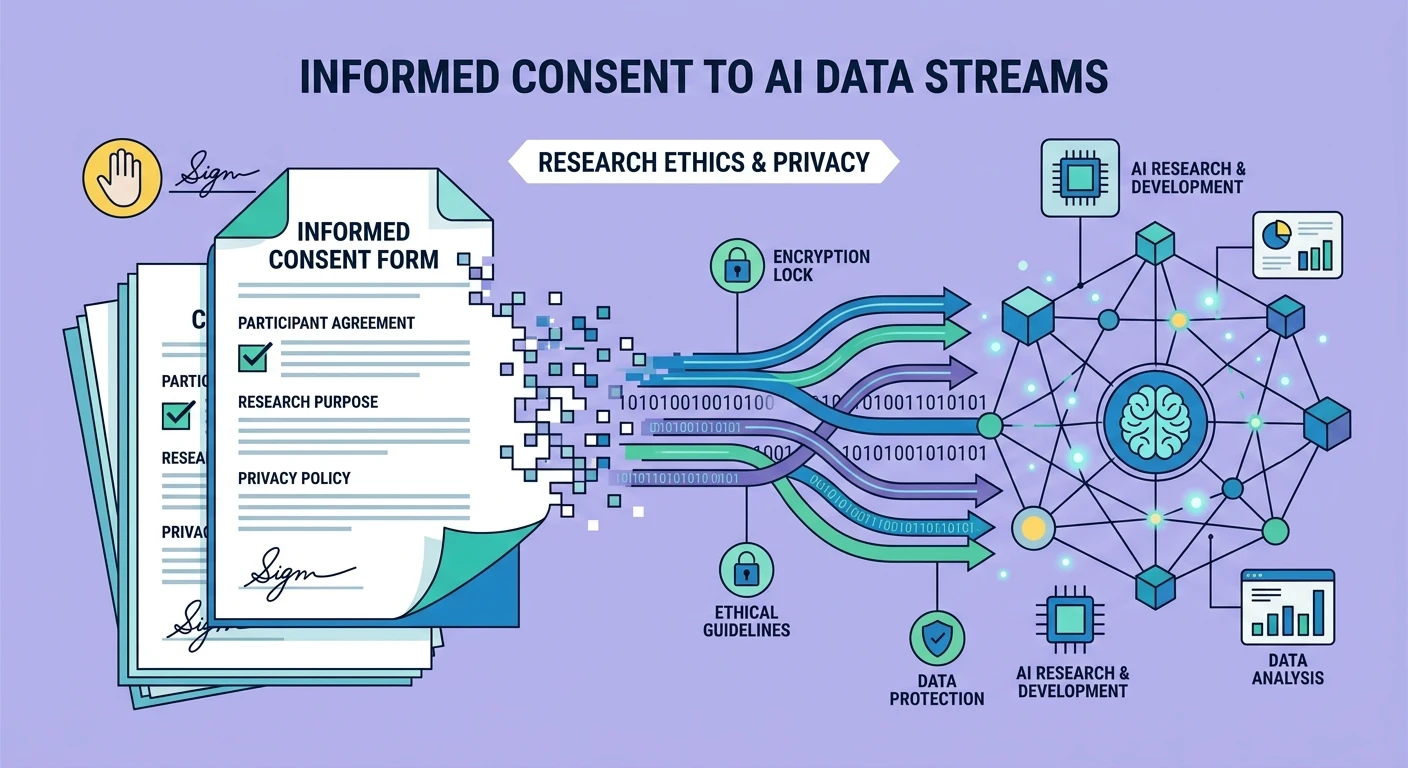
The data lifecycle in AI-moderated research is qualitatively different from traditional research in ways that matter for consent:
Embedding persistence. When participant responses are embedded into vector databases for retrieval-augmented analysis, the original text can often be reconstructed from the embeddings. "Anonymization" of the raw transcript does not anonymize the embedded representation. The participant's linguistic fingerprint persists in a form they never consented to specifically.
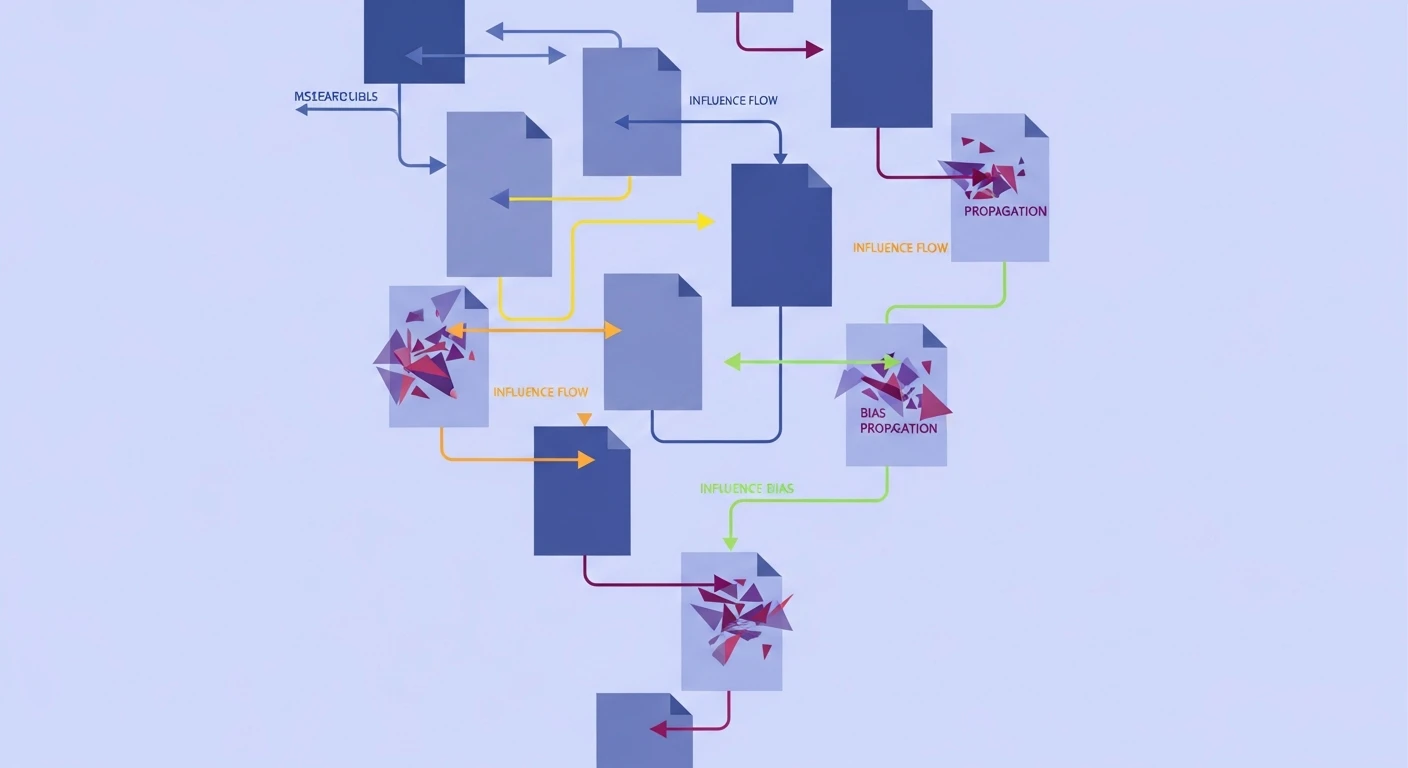
Cross-participant synthesis. AI analysis does not just code individual transcripts — it identifies patterns across participants in ways that can inadvertently re-identify individuals. If only one participant in your study works in a specific industry and mentions a specific challenge, pattern-matching across the corpus makes them identifiable regardless of name removal.
Model context contamination. When participant data enters an LLM's context window for analysis, the participant has no meaningful control over what other data shares that context. Their intimate disclosure about product frustration sits alongside fifty other participants' disclosures in the same analytical session. The consent form said "your data will be analyzed" — it did not say "your data will be analyzed simultaneously alongside everyone else's raw responses."
Indefinite retention logic. Traditional research has data retention policies: five years, then destruction. AI research repositories have economic incentives for indefinite retention — every past participant's data makes future analysis richer. The vector database of embedded responses becomes more valuable over time, creating a structural pressure against deletion that participants do not anticipate.
Why Current Consent Frameworks Fail
The standard research ethics framework — beneficence, non-maleficence, autonomy, justice — was designed for contexts where researchers could fully enumerate what would happen to data. AI research breaks this assumption:
Emergent capabilities problem. Consent must be given before data collection, but AI capabilities evolve after collection. Data consented for "qualitative analysis" in 2024 might be analyzable in ways impossible in 2024 but trivial in 2026. The participant consented to analysis with capabilities that existed at consent time — not capabilities that will exist in three years.
The vendor abstraction. When researchers use third-party AI tools, participants consent to the researcher's study — not to the AI vendor's data practices. Even when vendors promise not to train on customer data, the participant has no direct relationship with the vendor, no ability to audit compliance, and no standing to object if the vendor's policy changes.
Granularity mismatch. Consent is binary (yes/no) or categorical ("you may use my data for X but not Y"). But AI data use exists on a spectrum of invasiveness that binary consent cannot capture. Analyzing sentiment is different from embedding for retrieval is different from cross-participant pattern matching is different from fine-tuning. Current consent forms collapse all of these into "AI-assisted analysis."
Toward Meaningful AI Research Consent
Fixes exist, but they require researchers to prioritize participant comprehension over legal coverage:
Layered consent with concrete examples. Instead of abstract descriptions, show participants exactly what AI analysis looks like. Display a sample of how their words would appear in an analysis output. Show them a vector similarity search result. Make the abstract concrete. This mirrors how research democratization efforts must make methodology visible to non-expert stakeholders.
Temporal consent boundaries. Instead of indefinite consent, specify concrete retention periods for different data forms: raw transcripts retained for one year, embeddings retained for two years, analytical outputs retained for five years. Give participants a scheduled destruction date they can hold you to.
Capability-bounded consent. Specify the analytical techniques that will be applied at the time of consent. If you later want to apply new techniques — say, multi-modal analysis or cross-study synthesis — go back to participants for renewed consent. Yes, this is operationally expensive. That expense is the cost of genuine autonomy.
Withdrawal mechanisms that actually work. "You can withdraw at any time" is meaningless if withdrawal only removes the raw transcript while embedded representations persist across the system. Genuine withdrawal requires propagating deletion through every derived data form. Building these audit trail capabilities into research platforms is a technical challenge, but it is also a moral requirement.
The Competitive Advantage of Ethical Consent
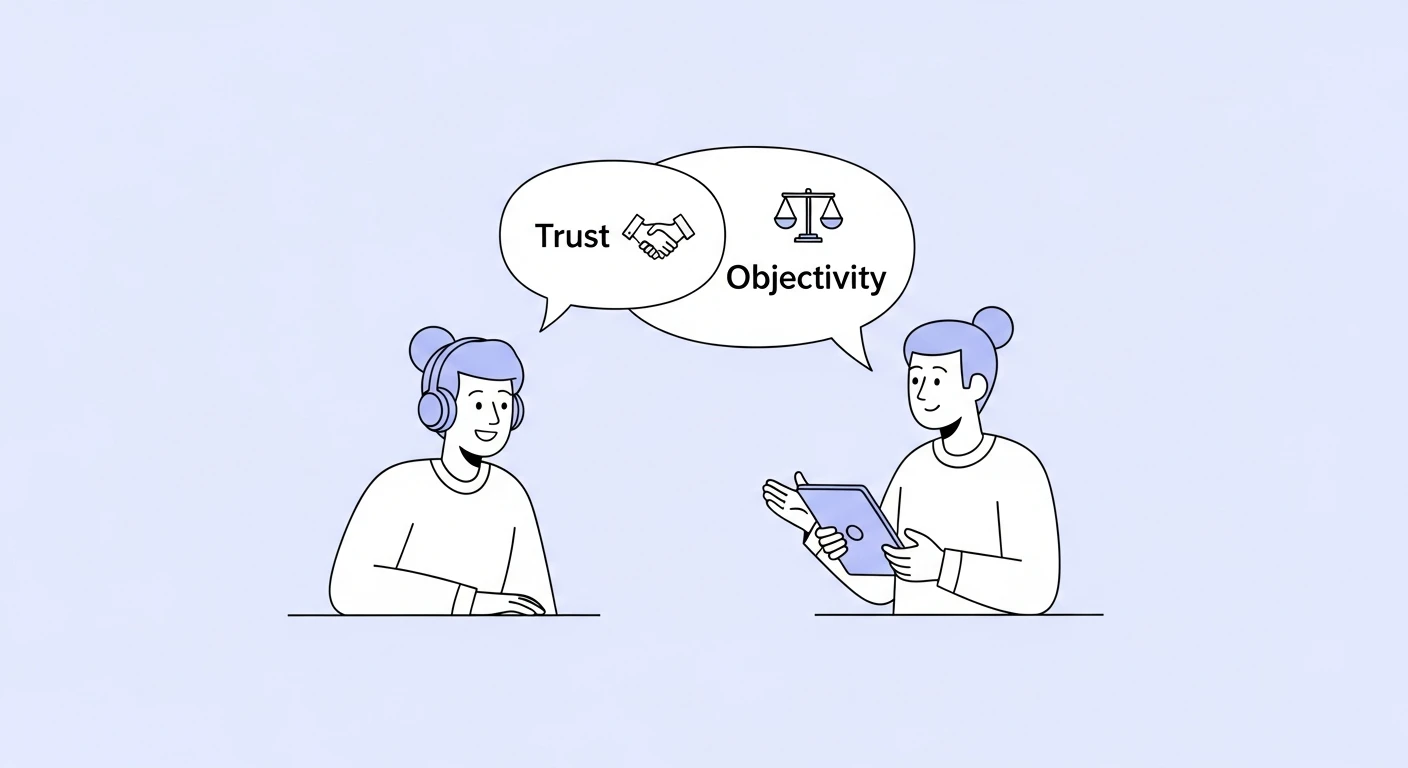
Research platforms that solve the consent paradox will not just be more ethical — they will produce better data. Participants who genuinely understand what they are consenting to self-select more accurately. Those who participate despite full understanding are more engaged, more honest, and more willing to share sensitive information because they trust the boundaries.
Participants who consent under vague terms, by contrast, hedge. They give socially desirable answers. They withhold the messy, contradictory, emotionally rich responses that make qualitative research valuable. The consent paradox is not just an ethics problem — it is a data quality problem that degrades every study it touches.
Organizations navigating this space should study how other domains handle similar transparency challenges. The principles behind AI governance frameworks — making automated decision-making visible and auditable — apply directly to research participant rights.
The Researcher's Responsibility
Ultimately, the consent paradox is not a participant problem. Participants are not failing to understand consent forms — researchers are failing to make consent understandable. The cognitive burden of comprehension sits with the party that has power (the researcher), not the party that lacks it (the participant).
This means every research team using AI tools has an obligation to understand exactly what those tools do with data — not at the marketing-copy level, but at the technical architecture level. If you cannot explain your tool's data lifecycle to a participant in plain language, you cannot meaningfully obtain their consent to it.
The phase change in AI adoption is making these questions urgent. As AI research tools move from early adopter curiosity to default methodology, the consent practices established now will calcify into norms. Getting them right while the field is still forming is a responsibility no research leader should defer.