The Compounding Complexity of Multi-Country Qualitative Research
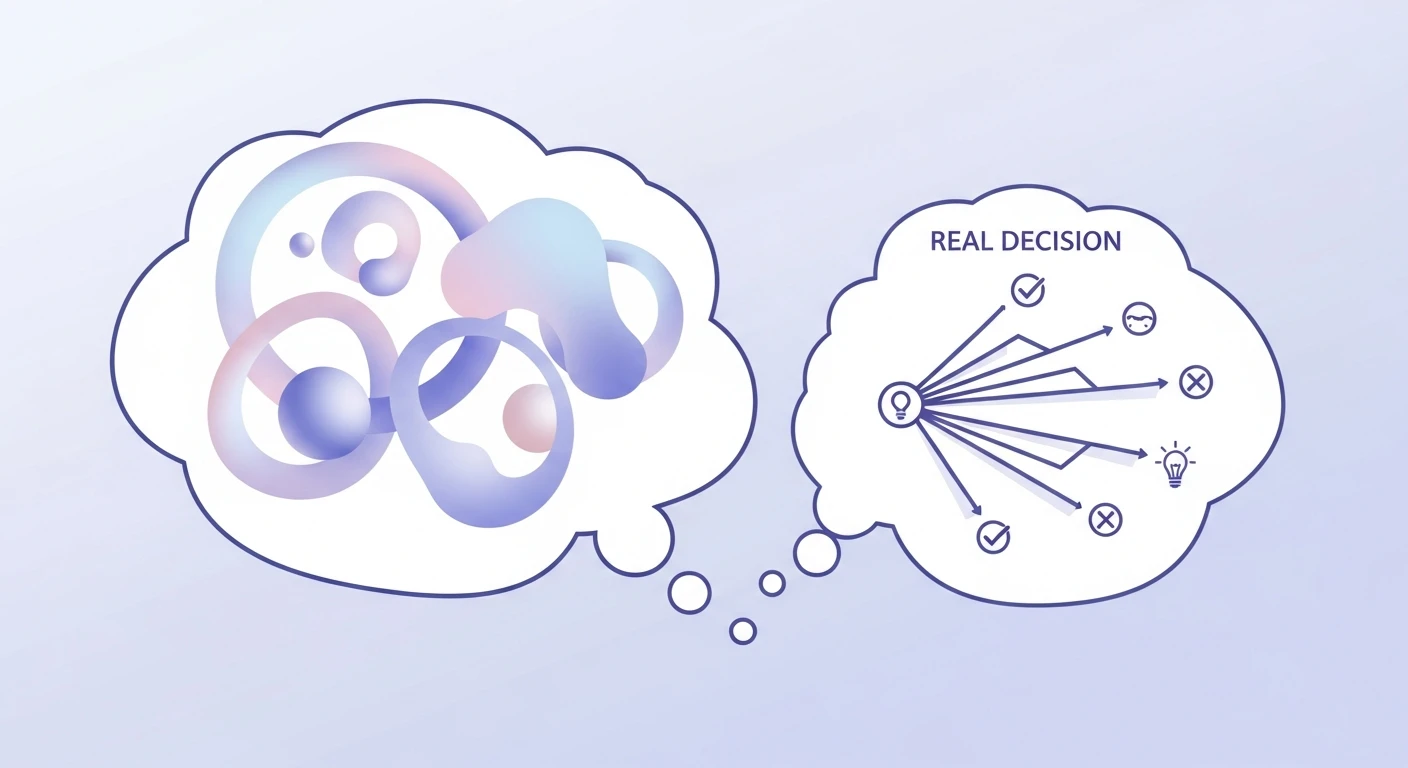
If you've ever managed a qualitative study spanning three or more countries, you know the feeling: what starts as a clean research design becomes an unwieldy operation where every decision—sampling, moderation, transcription, analysis—multiplies by the number of languages involved. And the hardest problems aren't logistical. They're epistemological.
How do you maintain analytical rigor when you can't read half the transcripts in their original language? How do you ensure that a theme identified in German interviews genuinely maps onto what participants said in Bahasa Indonesia? How do you catch the moment a participant code-switches from formal Mandarin to Cantonese slang—and know that it matters?
These aren't theoretical concerns. They're the daily reality of international qualitative research, and they're where most multi-country studies quietly lose their integrity.
The Real Challenges Nobody Warns You About
Code-Switching Participants
In multilingual societies—Malaysia, India, the Philippines, much of Africa—participants don't stay in one language. A Kenyan participant might shift between English and Sheng (Nairobi slang) mid-sentence. A Singaporean respondent moves fluidly between Singlish, Mandarin, and English within a single thought.
This isn't noise. It's data. The moments when participants switch languages often signal emotional intensity, cultural identity markers, or concepts that don't translate cleanly. But most transcription systems—human or automated—handle code-switching poorly. They either force everything into one language, flag switches as errors, or produce garbled output where the switch occurs.
Automatic Language Detection Limitations
Modern speech-to-text systems can identify languages, but they struggle with:
- Intra-sentence switching — detecting a shift mid-utterance rather than between utterances
- Minority and ethnic languages — Yoruba, Quechua, Welsh, or regional dialects that lack training data
- Creoles and pidgins — languages that share vocabulary with dominant languages but have distinct grammar
- Accent-influenced speech — where phonetic patterns from one language bleed into another
The result: transcripts that look complete but have silently dropped or misattributed the most analytically interesting moments.
Multi-Country Response Separation
When running a shared survey instrument across countries—common in adaptive survey designs—you need clean separation between country-level responses for comparative analysis. But participants don't always cooperate with your data architecture:
- Diaspora respondents who qualify for one country but respond with cultural frameworks from another
- Bilingual respondents who answer open-ended questions in a different language than expected
- Shared cultural regions (the Nordics, the Gulf states, East Africa) where country boundaries don't map cleanly onto cultural boundaries
Translation Quality Assurance at Scale
Back-translation—the gold standard—doesn't scale. When you're processing hundreds of hours of interviews across eight languages, you can't back-translate everything. But selective QA introduces its own bias: how do you know which segments to verify if you can't read the source?
Cultural Flattening in Cross-Cultural Coding
The most insidious problem. When you apply a single codebook across cultures, you inevitably impose one cultural framework's categories onto another's reality. The Japanese concept of *kuuki wo yomu* (reading the air) gets flattened into "social awareness." The Brazilian *jeitinho* becomes "creative problem-solving." The analytical convenience of unified codes comes at the cost of cultural specificity.
Practical Workflows That Actually Work
Building a Translation Pipeline
The days of sending transcripts to a translation agency and waiting two weeks are over—but the replacement isn't simply "run it through machine translation." A robust multilingual pipeline looks like this:
Layer 1: Automated first-pass translation — Machine translation (neural MT) for speed and coverage. This gives you working drafts within hours, not weeks.
Layer 2: Bilingual researcher review — Not full back-translation, but targeted review by someone who reads both languages. Focus on: emotional language, metaphors, culture-specific references, and any segment where the MT output feels flat or generic.
Layer 3: Analytical spot-checks — During coding, flag any translated segment where the code assignment feels uncertain. Route these back to bilingual reviewers with the specific analytical question: "Does this segment genuinely express frustration, or is the translation amplifying a milder sentiment?"
This tiered approach gives you speed without sacrificing the analytical integrity that matters most.
Country Tagging and Metadata Architecture
Before a single interview happens, build your metadata schema:
- Country of residence vs. country of origin vs. cultural affiliation — these are three different variables
- Language of interview vs. language of response (they differ when participants switch)
- Regional sub-codes — urban Lagos vs. rural Oyo State; Mumbai vs. Tier-3 Indian cities
- Interviewer language capability — track whether the moderator shared a language with the participant
This metadata enables the comparative analysis you'll need later. Without it, you're left trying to reconstruct context from memory.
Bilingual Analysis Protocols
For the analysis phase, establish clear protocols:
- Code in source language first — wherever possible, have bilingual coders work with original-language transcripts. Apply codes in the source language before mapping to the unified codebook.
- Maintain a "cultural concepts" log — a running document of terms, phrases, and ideas that resist clean translation. This becomes an analytical asset, not just a translation footnote.
- Conduct cross-language theme validation — when a theme emerges in one country's data, explicitly test it against other countries' data with bilingual support. Don't assume that because the translated text matches your code, the underlying meaning does.
- Preserve original-language quotes — in your final analysis, include source-language quotes alongside translations for key findings. This allows bilingual stakeholders to verify your interpretation.
How AI Helps—And Where It Falls Short
Language Detection and Segmentation
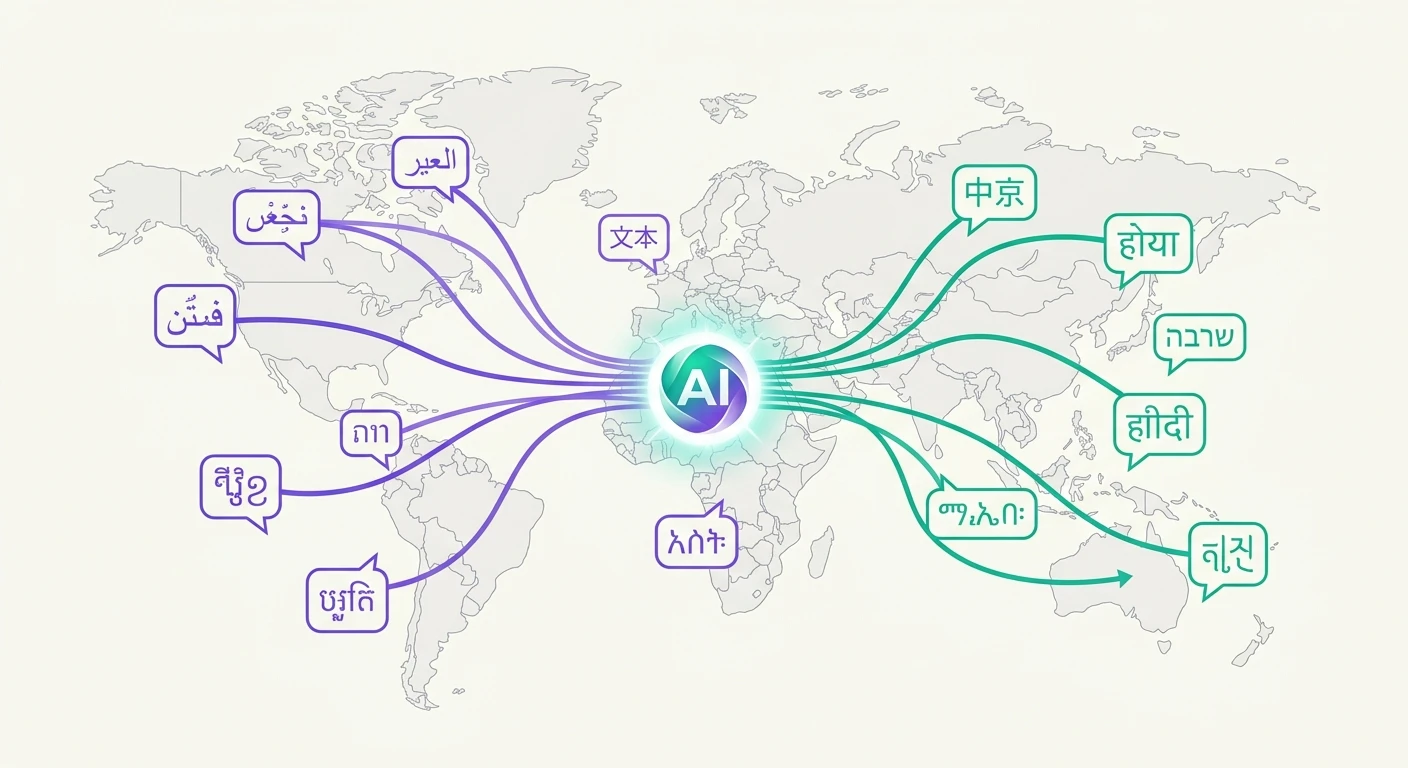
Modern AI excels at identifying which language is being spoken—at the utterance level. This means transcripts can be automatically segmented by language, making code-switching visible rather than invisible. For researchers working with AI-assisted transcription and analysis, this represents a significant advancement over even five years ago.
Where AI still struggles: detecting switches within a single clause, identifying minority languages with limited training data, and distinguishing between dialects of the same language (e.g., Gulf Arabic vs. Levantine Arabic).
Automated Translation with Human QA Loops
The practical sweet spot for most multi-country studies:
- AI handles volume — translating hundreds of hours of transcripts into a working language
- Confidence scoring — flagging segments where translation certainty is low
- Terminology consistency — maintaining glossaries across languages so the same concept translates consistently
- Human QA on flagged segments — bilingual reviewers focus attention where it matters most
This isn't about replacing human translators. It's about directing human expertise to the 15-20% of content where machine translation is genuinely uncertain, rather than having humans grind through the 80% that's straightforward.
Cross-Language Theme Detection
This is where AI's pattern recognition becomes genuinely powerful. By working with both source-language transcripts and translations simultaneously, AI can identify:
- Thematic convergence — concepts that appear across multiple countries despite different surface-language expressions
- Cultural divergence — where the same interview question produces structurally different responses across cultures (not just different content, but different *types* of answers)
- Sentiment patterns — detecting emotional intensity in source languages without relying solely on translation accuracy
For teams running AI-moderated interviews across multiple countries, these capabilities enable real-time adaptation—adjusting probing strategies based on cross-cultural patterns emerging during fieldwork, not just after.
Automated Country-Level Comparative Analysis
AI can rapidly generate country-level summaries and cross-country comparisons, highlighting:
- Where responses cluster by country vs. by other demographic variables
- Questions where country explains more variance than expected
- Unexpected similarities between culturally distant countries
This accelerates the analytical cycle from weeks to days—but always requires human interpretation of *why* patterns exist.
When Human Expertise Is Irreplaceable
Cultural Interpretation
No AI can tell you that a Japanese participant's silence after a question signals disagreement rather than thoughtfulness. No algorithm reliably distinguishes between Brazilian *saudade* and generic nostalgia. Cultural interpretation requires lived experience, and multi-country studies require it from multiple cultural perspectives.
Practical implication: Budget for cultural consultants or bilingual researchers from each target country at the analysis stage, not just the fieldwork stage.
Ethical Sensitivity Across Contexts
What constitutes informed consent varies culturally. How participants relate to authority (including researchers) differs. Topics that are sensitive in one context are mundane in another. These determinations require human judgment grounded in cultural knowledge.
Resolving Analytical Ambiguity
When your German data suggests Theme X and your Indonesian data might suggest Theme X or might suggest something entirely different—that resolution requires human judgment. AI can surface the ambiguity. Only humans can resolve it.
Stakeholder Communication
Explaining to a global client why their assumption that "quality means the same thing everywhere" is wrong requires diplomatic skill and cultural authority. The analyst who presents multi-country findings needs to advocate for cultural specificity without overwhelming stakeholders with complexity.
Building Your Multi-Country Research Stack
Before Fieldwork
- Design your metadata schema (country, language, cultural affiliation, sub-region)
- Establish your translation pipeline tiers and QA protocols
- Brief moderators on code-switching documentation (when to note it, not suppress it)
- Create your cultural concepts log template
- Test your transcription system on sample audio from each target language
During Fieldwork
- Monitor transcription quality per language daily—don't wait until all fieldwork is complete
- Flag code-switching instances in real-time for later analytical attention
- Maintain running notes on cultural context that won't be visible in transcripts alone
- Use adaptive survey branching to route multilingual respondents through language-appropriate paths
During Analysis
- Code in source language where possible before mapping to unified codebook
- Run cross-language theme validation with bilingual support
- Document every instance where you chose analytical convenience over cultural specificity
- Preserve the cultural concepts log as a deliverable, not just a working document
In Reporting
- Include source-language quotes alongside translations for key findings
- Report country-level findings before cross-country synthesis—let readers see the parts before the whole
- Name the limitations: which languages had full bilingual analysis vs. machine translation only?
- Distinguish between convergence (same finding, different contexts) and equivalence (genuinely the same phenomenon)
The Stakes of Getting This Wrong
Cultural flattening in qualitative research isn't just an academic concern. When a global brand launches based on "universal insights" that were actually artifacts of translation, the consequences are real. When a health intervention designed from English-language analysis fails in Hindi-speaking communities, the stakes are human.
The discipline of multilingual qualitative research isn't about adding complexity for its own sake. It's about maintaining the fundamental promise of qualitative methods: that we're capturing meaning as participants construct it, in the language and cultural frame they actually think in.
Moving Forward
Multi-country qualitative research will always be harder than single-country work. The question isn't how to eliminate that complexity, but how to manage it without losing the contextual richness that makes qualitative research valuable in the first place.
The tools are better than they've ever been. AI-assisted transcription handles more languages with higher accuracy. Machine translation is genuinely useful as a first pass. Cross-language pattern detection surfaces connections that human analysts might miss. But these tools serve researchers—they don't replace the cultural knowledge, analytical judgment, and methodological discipline that multi-country work demands.
If you're scaling qualitative research across languages, the path forward is clear: invest in your translation pipeline, build rigorous metadata from the start, preserve cultural specificity in your analysis, and use AI to amplify human expertise rather than substitute for it.
*Managing multilingual qualitative research across multiple countries? Book an information session to see how Qualz.ai helps research teams maintain analytical rigor at scale—across any language.*