The Insight Surplus Problem
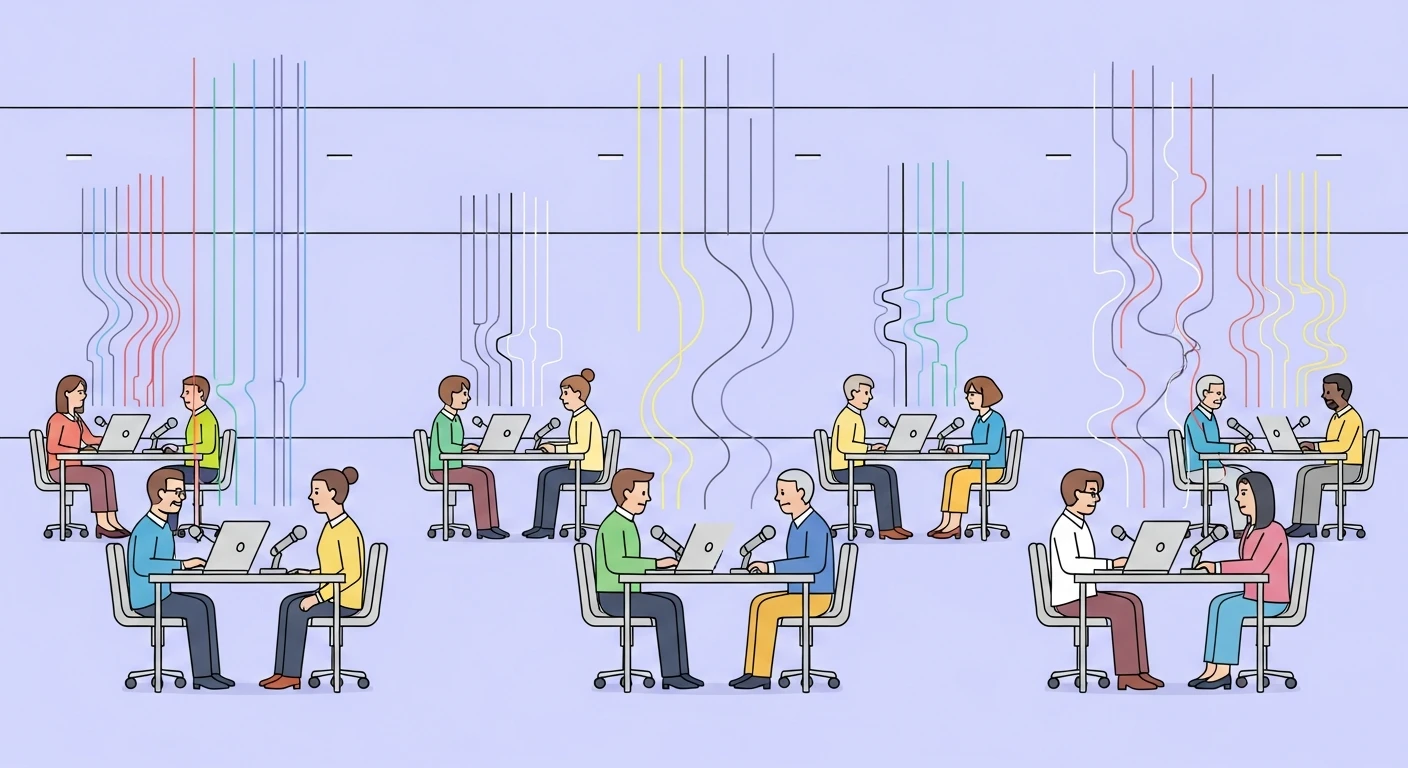
Research teams have never been more productive. AI-assisted analysis, automated transcription, and streamlined recruitment mean a single researcher can produce insights at three times the rate they could five years ago. Yet research utilization rates -- the percentage of findings that actually influence a product decision -- have not improved. In many organizations, they have declined.
The paradox is not about research quality. It is about attention. Your stakeholders operate in an environment where they receive hundreds of Slack messages, dozens of documents, and multiple meeting summaries every day. Your research report is competing for the same cognitive bandwidth as quarterly planning documents, customer escalations, and engineering status updates.
This is what makes building a research repository that teams actually use so difficult. The repository exists. The insights are catalogued. But nobody has the attention bandwidth to browse, discover, and integrate findings into their daily decision-making.
Why Traditional Research Deliverables Fail
The length problem. A 30-page research report represents weeks of careful work. It also represents 45 minutes of reading time that no product manager has between sprint planning and stakeholder meetings. Research deliverables were designed for an era when information was scarce and reading time was abundant. That era is gone.
The timing problem. Research findings arrive on their own schedule -- when analysis is complete, when synthesis reveals patterns, when the researcher feels confident in their conclusions. But stakeholder attention is available on a different schedule: during planning cycles, before key decisions, when a crisis demands evidence. The gap between when insights are ready and when attention is available creates a structural misalignment.
The format problem. Most research deliverables are designed to be comprehensive and defensible. They include methodology sections, sample descriptions, limitations, and carefully qualified conclusions. These are academically responsible. They are also attention-hostile. Stakeholders scanning for decision-relevant information must wade through context they do not need to find the three sentences that matter to their specific question.
As we explored in our analysis of how the sensemaking gap prevents research utilization, the issue is not that stakeholders do not value research. It is that the cognitive cost of extracting value from research deliverables exceeds their available attention budget.
The Attention Budget Framework
Every stakeholder has a finite daily attention budget. Through interviews with 40+ product leaders, we have mapped how this budget typically allocates:
- 40% goes to reactive work: Slack, email, escalations, quick decisions
- 30% goes to meetings: standups, planning, reviews, one-on-ones
- 20% goes to deep work: strategy, writing, complex problem-solving
- 10% remains for discretionary information consumption
Your research competes within that final 10% -- roughly 45-50 minutes per day -- against competitor analysis, industry news, analytics dashboards, and internal updates from other teams. If your insight delivery requires more than 5-7 minutes of engagement per finding, you have already lost most of your audience.
This is not a stakeholder failing. It is a resource constraint that research teams must design around.
Designing for Attention Scarcity
The headline-first principle. Every research finding should lead with the decision it enables, not the evidence that supports it. "Users abandon checkout when shipping costs appear late" is actionable in one sentence. The supporting evidence -- sample size, quotes, behavioral data -- exists for those who want to go deeper, but the headline carries the insight.
The drip model. Instead of delivering a 30-page report at project completion, distribute findings as they emerge. One insight per day, delivered in the channel where stakeholders already spend attention (Slack, email digest, standup format). This matches how the principles of continuous discovery versus project-based research reshape not just how we collect data but how we distribute it.
The decision-trigger approach. Map your findings to specific upcoming decisions. "Before you finalize the Q3 roadmap, here are three findings that should influence priority order" cuts through noise because it connects to something the stakeholder already cares about. Research that arrives attached to a decision gets attention. Research that arrives as general knowledge gets bookmarked and forgotten.
The layered artifact. Design deliverables with three layers: (1) a single sentence capturing the core finding, (2) a paragraph providing context and implications, (3) a full document with methodology, quotes, and evidence. Stakeholders self-select their depth based on available attention. Most will consume layer one. Decision-makers facing relevant choices will read layer two. Only fellow researchers and deeply invested stakeholders will engage layer three.
Measuring Research Attention
If you cannot measure attention, you cannot improve it. Track these metrics:
- Open rates on research communications (if using email or Slack workflows)
- Time-to-first-reference: how long between publishing a finding and someone citing it in a decision document or meeting
- Stakeholder recall: in quarterly check-ins, can stakeholders name three recent findings without prompting?
- Decision attribution: how many product decisions explicitly reference research evidence in their rationale?
These metrics reveal whether your insights are reaching cognitive processing or simply accumulating in unopened repositories. They complement the research ops metrics that matter for measuring program health beyond simple output volume.
The Organizational Attention Architecture
Some teams solve this structurally rather than through better deliverables:
Embedded researchers who sit in product squads do not need to "deliver" findings -- they inject insights directly into conversations where decisions happen. The attention cost drops to zero because the insight arrives in the moment of relevance.
Research office hours create a dedicated time slot where stakeholders know attention for research is expected. Rather than competing for scattered attention, you get a guaranteed window.
Insight newsletters with consistent formatting train stakeholders to process research efficiently. When the format is predictable, cognitive load drops. When cognitive load drops, engagement rises.
The attention economy of research is not a problem that better writing alone can solve. It requires understanding how enterprise AI systems approach information architecture -- treating insight distribution as a system design challenge, not a communication skills challenge.
What This Means for Research Practice
The implication is uncomfortable: research teams must accept that comprehensiveness competes with impact. You cannot optimize for both thorough documentation and maximum stakeholder engagement. The teams achieving highest research utilization rates have made deliberate tradeoffs:
- They produce shorter deliverables with links to deeper evidence
- They distribute findings through existing attention channels rather than creating new ones
- They time delivery to decision moments rather than analysis completion
- They measure consumption, not just production
The attention economy does not reward the most rigorous research. It rewards the most accessible research. The teams that understand this distinction are the ones whose findings actually shape products.