The Sprint Cycle as Temporal Filter
Continuous discovery has become the default operating model for product research teams. The logic is appealing: conduct research every sprint, maintain constant contact with users, feed insights into the development cycle at the cadence decisions are made. Teresa Torres's discovery habits framework, two-week interview cycles, and sprint-aligned synthesis have become the gold standard.
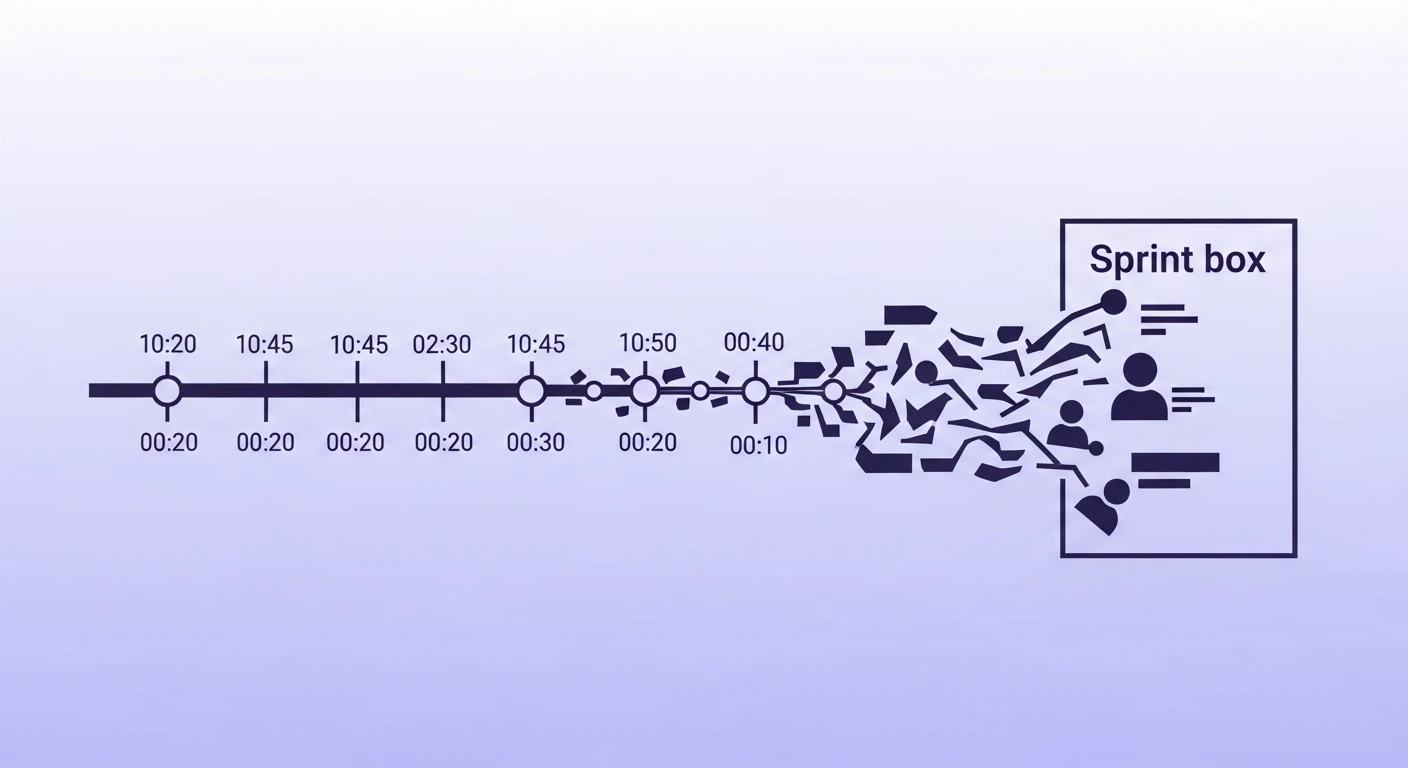
But this cadence imposes a temporal resolution on user insight that fundamentally distorts certain categories of findings. When your research window is two weeks, you can only see phenomena that manifest within two-week windows. User patterns that unfold over months -- gradual habit formation, slow trust erosion, seasonal behavior shifts, progressive feature abandonment -- become structurally invisible to the research apparatus.
This is not a failure of execution. It is an architectural limitation of sprint-synchronized research. The cadence that makes research operationally sustainable makes certain insights structurally unattainable.
What Temporal Compression Hides
Gradual Behavior Drift
Users do not abandon products in dramatic moments. They drift away gradually -- opening the app less frequently, engaging with fewer features, defaulting to competitor alternatives for specific tasks. This drift happens over 6-12 weeks, far slower than any sprint cycle can detect.
Sprint-cadence research catches users at single points in time. If you interview a user during week 3 of a 10-week drift, they report general satisfaction (they are still using the product). By week 10, they have churned -- but no single two-week research window captured the drift in progress. Each snapshot looked fine. The trajectory was invisible.
This connects to why diary studies reveal what interviews miss: longitudinal methods capture trajectories that point-in-time methods cannot. But sprint-based research operations rarely accommodate diary studies because their timelines exceed sprint boundaries.
Seasonal and Cyclical Patterns
User behavior has rhythms that exceed monthly cycles: quarterly business reviews change how B2B tools are used, academic calendars reshape student app behavior, tax seasons transform financial tool engagement, holiday periods alter consumer habits. These patterns are invisible within any two-week window.
A research team conducting sprint-cadence discovery during January will observe different user needs than one studying the same users in September. Neither is wrong -- but neither captures the cyclical pattern itself. Only research that spans multiple cycles can identify the rhythm. Sprint-based teams instead attribute seasonal variation to product changes, feature releases, or market shifts because those explanations fit within their temporal frame.
Cumulative Friction Buildup
Individual usability frictions often fall below the reporting threshold in any single session. A user does not mention a slightly awkward interaction during their interview because it takes three seconds and they have adapted. But that three-second friction, repeated 50 times per week for six months, accumulates into genuine dissatisfaction. By the time the user can articulate the frustration, it has calcified into a product perception that no single feature fix addresses.
Sprint-cadence research asks users about their current experience -- which at any point in the accumulation cycle seems fine. The cumulative effect only becomes articulable after it has already shaped product perception irreversibly. The articulation gap is temporal as well as cognitive: users cannot articulate cumulative frustrations until they have accumulated past a threshold that sprint-resolution research will never catch in formation.
Trust Development and Erosion
Trust is built and destroyed over weeks and months, not days. A user's trust in a product deepens through repeated positive experiences or erodes through repeated minor failures. Neither trajectory is visible in a two-week window because trust operates at a temporal scale that exceeds sprint boundaries.
Research conducted at sprint cadence captures trust as a static state rather than a dynamic process. Users report that they trust or do not trust the product -- but the developmental trajectory that led to either state is invisible. Understanding why users trust (or stopped trusting) requires longitudinal observation that sprint cycles cannot accommodate.
The Structural Forces Maintaining Temporal Compression
Stakeholder Appetite for Recency
Product stakeholders want recent data. Sprint-cadence research feeds this appetite perfectly: every two weeks, fresh insights from recent interviews. This recency creates a sense of being connected to users that stakeholders value highly.
But as the recency bias trap in continuous discovery documents, recency is not validity. Recent data from compressed temporal windows may be less valid than older data from longitudinal observation. The stakeholder preference for freshness over depth creates organizational pressure against longitudinal methods that cannot deliver bi-weekly findings.
Operational Synchronization
Research operations align with development cadences because coordination is easier when everyone operates on the same clock. Research that spans months does not fit sprint planning. It does not feed retrospectives. It cannot be tied to specific feature work. The operational machinery of modern product development has no slot for insights that emerge over quarters rather than sprints.
This is a variant of how research velocity traps operate: the cadence that makes research operationally convenient makes it methodologically limited. Speed and temporal resolution trade off against each other, and most organizations optimize for speed without acknowledging what resolution they sacrifice.
The Insight Freshness Illusion
Teams conducting sprint-cadence research generate a steady stream of insights, creating the impression of comprehensive user understanding. The volume of findings masks the narrowness of the temporal window. Leaders see twenty insights per month and conclude that the research program is thorough -- without recognizing that all twenty insights share the same temporal blind spot.
This is analogous to the participation debt problem but in the time domain rather than the participant domain. Just as recruiting from the same pool narrows your participant aperture, researching at the same cadence narrows your temporal aperture. Both produce volume without breadth.
Practical Compensations
Layered Research Cadences
Maintain sprint-cadence discovery for tactical questions while running parallel longitudinal tracks for strategic questions:
- Sprint cadence (2 weeks): Usability feedback, feature reaction, interaction-level insights
- Monthly cadence: Workflow evolution, habit formation, tool-switching patterns
- Quarterly cadence: Satisfaction trajectories, relationship dynamics, competitive perception shifts
- Biannual cadence: Behavioral trend analysis, longitudinal cohort tracking
Each cadence feeds different decision types. Sprint insights feed feature work. Monthly insights feed roadmap priorities. Quarterly insights feed strategic direction. Biannual insights feed product vision. No single cadence serves all decision needs.
Embedded Temporal Markers
Within sprint-cadence interviews, build in questions that probe temporal dynamics:
- "How has your usage of X changed over the past three months?"
- "What did you do before you started using our product for this workflow?"
- "If you think back to your first month using this, what feels different now?"
These questions cannot replace longitudinal observation, but they can surface temporal patterns that warrant deeper investigation. They work as screening devices -- identifying longitudinal phenomena that sprint cadence cannot study but can at least detect.
Retrospective Longitudinal Assembly
Every quarter, assemble sprint-cadence findings into longitudinal views. Look for:
- Themes that appeared once and never recurred (potential seasonal patterns)
- Themes that intensified gradually across sprints (cumulative buildup)
- Contradictions between early and late sprint findings (belief evolution)
- Participant-level changes across multiple studies (individual trajectories)
This assembly is imperfect -- it reconstructs temporal patterns from discrete snapshots rather than observing them directly. But it is better than ignoring the temporal dimension entirely, which is what most sprint-cadence teams do by default.
Strategic Diary Studies
Run one or two diary studies per year on phenomena that sprint cadence cannot capture. These studies operate on their own timeline (6-12 weeks), outside sprint synchronization. They require separate operational support and different stakeholder expectations -- but they produce the longitudinal insights that sprint-cadence research structurally cannot.
The key is accepting that these studies will not feed specific sprint decisions. They feed strategic understanding that informs multiple quarters of work. This requires stakeholders who value long-term pattern recognition over short-term tactical guidance -- which in turn requires demonstrating the value of longitudinal insight through concrete examples of what sprint cadence missed.
The Decision Framework
Not every research question requires longitudinal resolution. The diagnostic question is: does this phenomenon have a temporal development trajectory that exceeds two weeks?
- Feature usability: Two-week window is sufficient. Users react to interfaces in minutes.
- Workflow adoption: Requires monthly resolution. Habit formation takes 4-8 weeks.
- Product switching: Requires quarterly resolution. Switching decisions build over months.
- Trust dynamics: Requires biannual resolution. Trust develops and erodes slowly.
- Market perception shifts: Requires annual resolution. Category perception moves glacially.
Match temporal resolution to phenomenon speed. Sprint cadence is correct for fast phenomena. It is insufficient for slow phenomena. The error is assuming a single cadence serves all research needs -- just as a single data source is never enough for product decisions, a single temporal resolution is never enough for understanding user behavior in its full complexity.
The Organizational Reality
Most product organizations will not abandon sprint-cadence research -- nor should they. The tactical value of regular user contact is real. The problem is not the cadence itself but the fiction that it provides comprehensive user understanding.
Acknowledging temporal compression as a structural limitation (not a execution failure) changes how teams interpret sprint-cadence findings. Every finding from a two-week window carries an implicit caveat: this is true at this resolution. It may not be true at longer timescales. Whether it matters at longer timescales depends on the decision it serves.
Teams that build this temporal awareness into their research operations make better decisions -- not because they research more, but because they understand what their research can and cannot see. Temporal humility is the recognition that your research cadence is a lens with specific resolution, not a window that shows everything.