The Repository Paradox
Every research operations leader eventually builds a repository. The logic is compelling: we conduct dozens of studies per year, insights get trapped in slide decks and personal drives, new researchers repeat old studies, and institutional knowledge walks out the door with every departure. A centralized, searchable repository solves all of this.
Except it does not.
The pattern is remarkably consistent across organizations. Month one: enthusiasm. The team migrates past research, tags findings, builds taxonomy. Month two: adoption. Researchers add new findings, stakeholders browse. Month three: plateau. Contribution slows, search frequency drops. Month six: abandonment. The repository exists but nobody consults it before starting new work. It has become a digital archive -- technically accessible, practically invisible.
This is not a tool problem. Organizations cycle through Dovetail, Condens, Notion, Airtable, and custom solutions with identical results. The rot is organizational, not technical.
The Five Mechanisms of Repository Rot
1. The Freshness Decay Problem
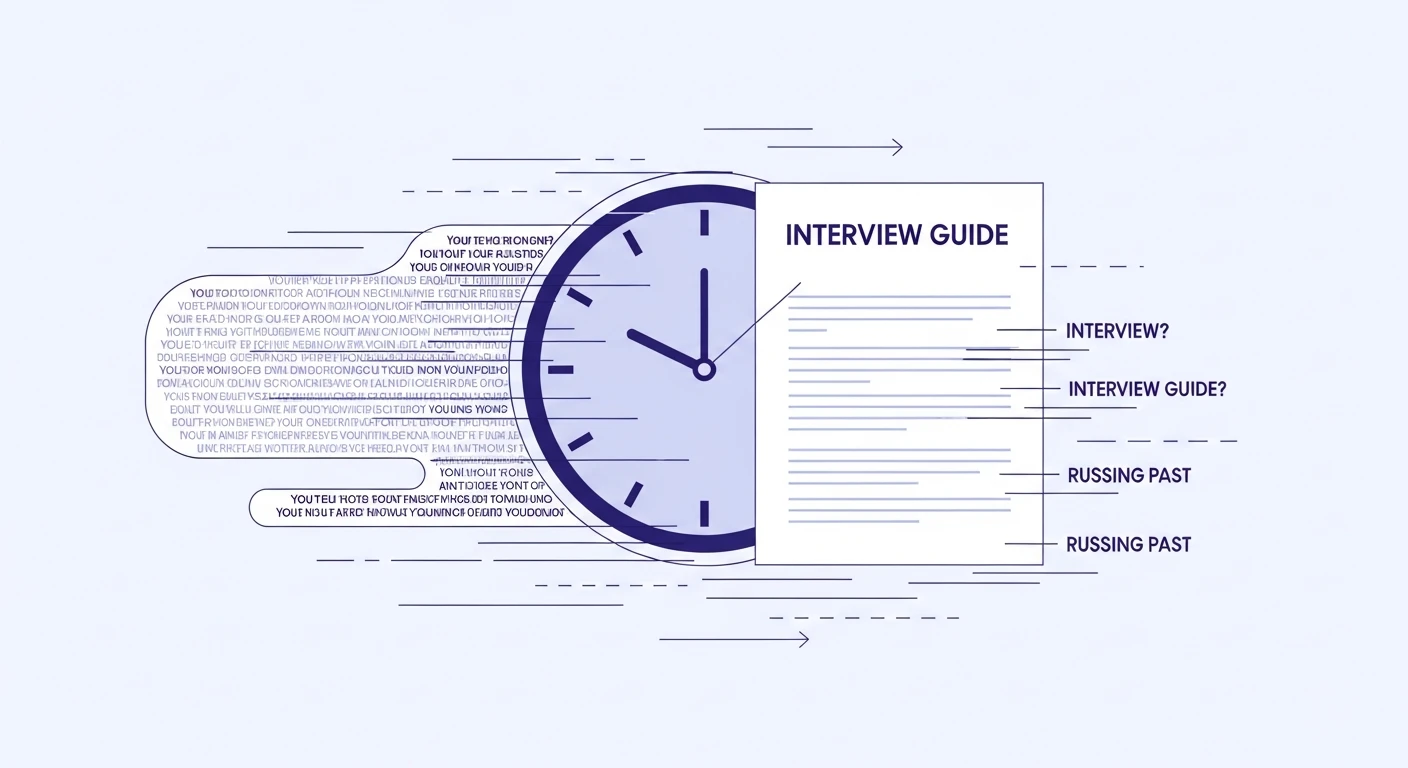
Research findings have a half-life. A study about user onboarding friction is highly relevant for three months, moderately relevant for six, and actively misleading after twelve -- because the product changed, the user base shifted, and the competitive landscape evolved. But repositories do not decay their contents. Six-month-old findings sit alongside yesterday's research with equal visual weight and apparent authority.
Researchers learn this quickly. After being burned once by acting on stale repository findings -- "but the research said users prefer X!" "That research was from before we redesigned the entire flow" -- they stop trusting the repository entirely. The rational response to a mix of current and outdated findings with no reliable way to distinguish them is to ignore everything and run fresh research.
The insight decay problem is well documented at the individual finding level. At the repository level, it is existential: a critical mass of stale findings poisons trust in all findings, including current ones.
2. The Context Stripping Problem
Repository entries strip context by design. To make findings searchable and browsable, they must be extracted from the rich narrative of the original study and reduced to tagged, categorized nuggets. But qualitative insights are not nuggets -- they are interpretations embedded in specific methodological and business contexts.
"Users find the pricing page confusing" means something very different when you know it came from a study of enterprise buyers evaluating annual contracts versus a study of free-trial users considering upgrades. The repository tag says "pricing, confusion, usability" regardless. The decontextualization problem that affects individual quotes affects entire repository entries.
Researchers who understand this stop trusting repository findings at face value. They would need to trace each finding back to its original study to evaluate its relevance -- which takes longer than just running new research. The efficiency promise of the repository collapses under the weight of necessary context verification.
3. The Contribution Friction Problem
Adding findings to a repository takes effort. Not enormous effort -- maybe 15-30 minutes per study to tag, categorize, and summarize key findings. But this effort comes at the worst possible time: immediately after completing a study, when the researcher is already exhausted from analysis and under pressure to start the next project.
The calculus is: spend 30 minutes now, creating value that benefits an unknown future person in an unknown future context. This is a classic tragedy of the commons. The individual cost is immediate and certain. The collective benefit is deferred and uncertain. Contribution declines predictably.
Some organizations mandate contribution. This produces compliance without quality -- entries that technically exist but are so poorly tagged or summarized that they are functionally useless. Forced repository maintenance creates research synthesis debt of a specific kind: entries that appear complete but lack the care that would make them actually useful.
4. The Search Literacy Problem
Repositories assume people know what to search for. But the highest-value repository use cases are precisely the ones where the searcher does not know what they are looking for -- they need to discover what prior research exists about a problem they are just beginning to frame.
Discovery requires browsing, not searching. But repositories with hundreds of entries are not browsable. The taxonomy that seemed logical during setup becomes opaque to new team members. Tags proliferate until they lose discriminative value. Categories overlap until everything belongs to multiple categories, making none useful as filters.
The result: repositories serve people who already know what exists and need to find it again. They fail people who need to discover what exists. The latter group -- new researchers, stakeholders exploring a problem space, cross-functional team members -- are the primary intended beneficiaries of the repository.
5. The Ownership Vacuum
Repositories require curation. Someone must retire stale findings, resolve conflicting entries, maintain taxonomy consistency, and champion usage. This curatorial role is essential but rarely formally assigned. It falls to whoever built the repository initially -- until that person gets busy, changes roles, or leaves.
Without active curation, repositories accumulate contradictions (old and new findings about the same feature that disagree), redundancies (the same finding entered by different researchers under different tags), and gaps (important studies never added because nobody felt responsible). The repository becomes less trustworthy over time even if individual entries remain accurate, because the collection as a whole becomes incoherent.
Why Traditional Solutions Fail
More Tools Do Not Help
Every new repository tool promises better adoption through better UX: AI-powered tagging, automatic summarization, Slack integration, beautiful dashboards. These address contribution friction marginally but ignore the deeper problems. A beautifully designed repository full of stale, decontextualized findings is still a graveyard -- just a well-landscaped one.
Mandates Create Compliance, Not Usage
Forcing researchers to add to the repository ensures content exists. It does not ensure anyone searches before starting new work. The failure mode is not empty repositories -- it is full repositories that nobody consults. Mandating input without creating genuine demand for output produces archives, not knowledge systems.
AI Search Does Not Solve Discovery
Semantic search and AI-powered recommendations improve retrieval for known queries. But the core discovery problem remains: people do not search for things they do not know exist. Even the best AI cannot recommend relevant prior research if the user does not engage with the system in the first place.
The AI-native operating model offers a better frame: rather than building repositories that humans must actively query, embed research knowledge into the workflows where decisions happen. The research finds the decision-maker rather than requiring the decision-maker to find the research.
Living Repositories: An Alternative Architecture
Push, Not Pull
Repositories rot because they depend on pull behavior: someone must decide to search, must know what to search for, must evaluate results for relevance. Living repositories push relevant findings to decision-makers at the moment of relevance.
When a product team creates a new initiative brief, the system surfaces prior research about that problem space. When a designer opens a file for a feature area, relevant findings appear contextually. When a researcher starts a new study proposal, the system shows what already exists on that topic.
This is not a technology fantasy -- it requires integration between the repository and the tools where decisions happen. But it transforms the repository from a library (you must go there) to a colleague (it comes to you).
Time-Decay Scoring
Repositories should make freshness visible. Every finding should carry a confidence-decay indicator based on: how old the finding is, how much the product has changed since, whether subsequent research has confirmed or contradicted it, and whether the user population has shifted.
Stale findings should not disappear -- they provide historical context. But they should be visually distinguished from current findings and explicitly marked as potentially outdated. The system should flag when a finding's confidence has decayed below a usability threshold and suggest either revalidation or retirement.
Living Synthesis Over Static Entries
Rather than storing individual findings, maintain living synthesis documents that evolve as new research arrives. Instead of 47 separate findings about onboarding tagged under "onboarding," maintain a single evolving synthesis: "What We Know About Onboarding (last updated: 2 weeks ago)." Each new study updates the synthesis rather than adding another atomic entry.
This addresses context stripping by preserving narrative coherence. It addresses freshness by making update recency visible. It addresses discovery by providing a browsable set of topic-level summaries rather than hundreds of atomic findings. As the era of AI engineering demonstrates, the most effective knowledge systems are those that maintain coherent, evolving representations rather than append-only databases.
Embedded Curation Rituals
Do not rely on spontaneous curation. Build it into research operations cadence:
- Monthly: review flagged stale findings, retire or revalidate
- Quarterly: audit taxonomy, merge redundant tags, identify gaps
- Per-study: update relevant synthesis documents as part of the study closeout process (not as optional extra work)
The curation work should be distributed across the team with clear accountability, not concentrated in one person who becomes a bottleneck and single point of failure.
Practical Takeaways
- Measure repository health, not size. Track search-before-study rate, finding citation in decisions, and stale content ratio -- not number of entries or tags applied.
- Build push mechanisms. If researchers must remember to search the repository, they will not. Integrate contextual surfacing into existing workflows.
- Make freshness visible. Every repository entry needs a visible confidence indicator that decays over time and with product changes.
- Invest in synthesis over storage. Living topic summaries serve teams better than hundreds of atomic findings.
- Assign curation formally. Repository maintenance is real work that requires dedicated time, not volunteer enthusiasm.
- Accept partial coverage. A repository with 30% of studies entered properly is more useful than 100% entered poorly. Quality of entries matters more than completeness.
- Design for discovery, not retrieval. The repository's hardest job is helping people find research they did not know existed. Optimize for browsing and contextual recommendation, not just search.
Research repositories fail not because of technology but because they violate how organizations actually learn. Knowledge does not transfer through storage and retrieval -- it transfers through conversation, context, and timely relevance. Build systems that respect this, or accept that your repository will become another well-intentioned graveyard within six months.