The Comfort Problem in Research Panels
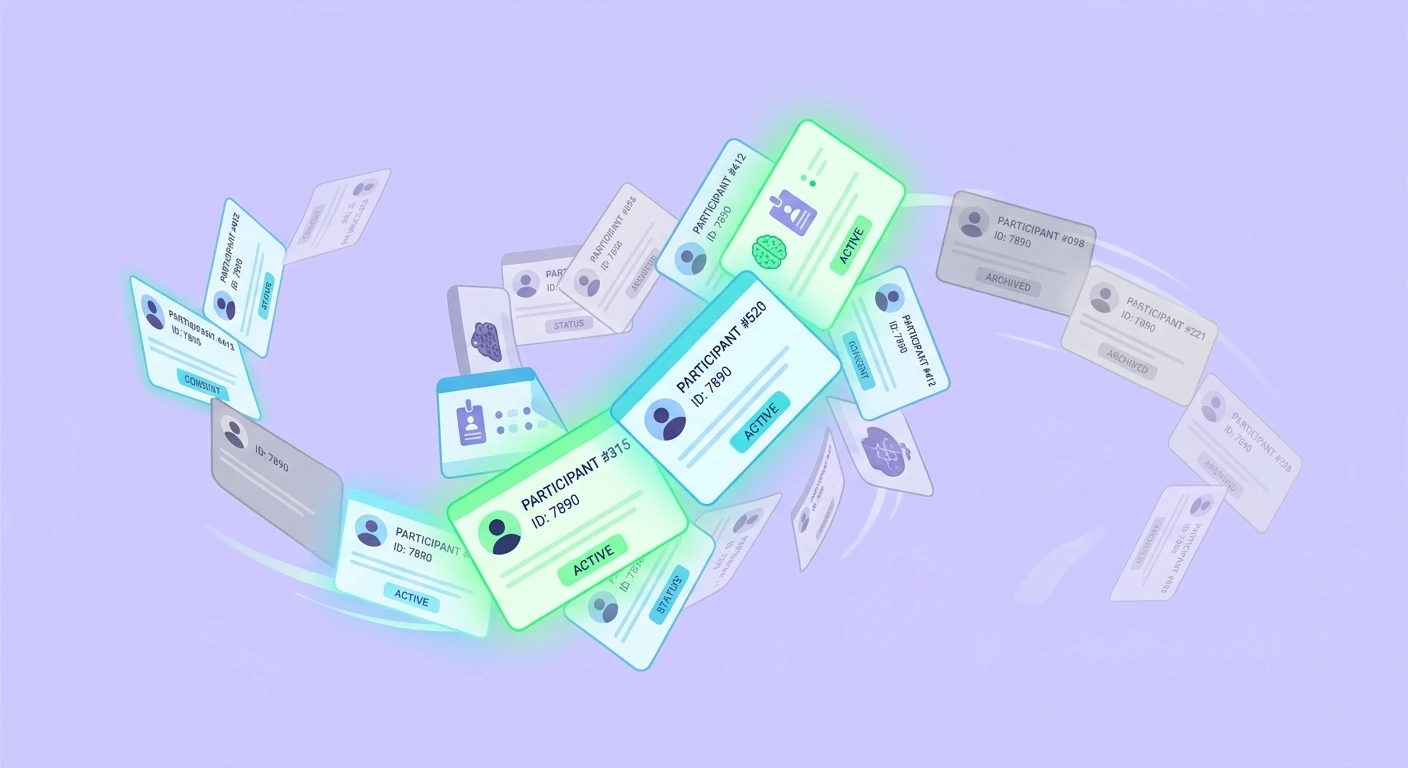
Your research operations team built a beautiful participant panel. Hundreds of vetted users, segmented by persona, reachable within 48 hours. Recruitment went from a two-week bottleneck to a same-day workflow. Leadership loves it.
There is just one problem: your data is quietly degrading.
Participants who have done three, four, eight sessions with your team are no longer naive respondents. They have learned your interview structure. They recognize your probing patterns. They have internalized what kinds of answers generate the most engaged follow-up questions from your moderators. And without meaning to, they are giving you exactly what you want to hear.
This is panel fatigue -- not the kind where participants are tired of surveys, but the more insidious kind where repeated exposure to your research process transforms authentic respondents into sophisticated performers.
How Panel Conditioning Corrupts Your Data
The mechanism is straightforward and well-documented in social psychology. Participants who interact repeatedly with the same research team develop three problematic behaviors:
Demand characteristics awareness. After multiple sessions, participants develop accurate mental models of what the research is trying to learn. They start anticipating questions and pre-formulating answers that align with perceived research goals. A participant who was refreshingly blunt in session one becomes diplomatically constructive by session four.
Social desirability amplification. The researcher-participant relationship deepens over time. Returning participants feel a social bond with moderators they have spoken with before. This bond makes them less likely to express negative opinions, report frustrations, or contradict previous statements -- exactly the behaviors that produce the most valuable qualitative insights.
Vocabulary convergence. This is the subtlest and most damaging effect. Participants begin adopting your team's terminology. When you hear a user spontaneously describe their experience using the exact language from your product team's mental model, it feels like powerful validation. But if that user has been in three previous sessions where that language was used by the moderator, what you are hearing is echo, not signal.
A mid-size SaaS company discovered this pattern when they noticed that satisfaction scores from their panel participants were consistently 15-20% higher than scores from freshly recruited users in the same segments. The panel was not lying -- they had simply been conditioned to frame their experience more positively through repeated pleasant interactions with the research team.
The Quantitative Signature of Panel Fatigue
Panel fatigue leaves measurable traces in your data if you know where to look.
Response latency compression. Fresh participants pause, think, and sometimes struggle to articulate their experience. Conditioned panelists respond faster because they have practiced expressing their views in research contexts. If your average response latency is decreasing over time without methodology changes, your panel is conditioning.
Decreased contradiction frequency. Authentic qualitative data contains contradictions -- people say one thing, do another, or express conflicting preferences within the same session. As we explored in the context of moderator bias in AI-assisted interviews, the presence of contradictions is actually a signal of honest, unfiltered responding. Conditioned panelists produce smoother, more internally consistent narratives because they have learned to organize their thoughts before speaking.
Theme convergence across sessions. When the same participants return, they tend to reinforce themes from previous sessions rather than introducing new ones. Your thematic analysis starts showing diminishing returns -- not because you have reached saturation, but because you are re-interviewing the same conditioned perspectives.
Increased meta-commentary. Watch for participants who say things like "I know you are probably looking for..." or "Last time I mentioned..." or "I think what you want to know is..." These are explicit signals that the participant is modeling your research goals rather than simply reporting their experience.
Designing Against Panel Fatigue
The solution is not to abandon panels -- they are too operationally valuable. The solution is to architect your panel strategy with fatigue mitigation built in.
Implement Rotation Policies
Set maximum session counts per participant per quarter. For most qualitative research, three to four sessions per year is the ceiling before conditioning effects become measurable. Track this rigorously -- building a research repository that teams actually use requires participant metadata, not just insight metadata.
Blend Panel and Fresh Recruitment
For every study, recruit a minimum of 30-40% fresh participants alongside panel members. This gives you a built-in comparison group. If panel participants and fresh recruits are telling meaningfully different stories, you have a conditioning problem.
Rotate Moderators
The social bond that drives desirability bias is moderator-specific. Assigning returning participants to different moderators breaks the relationship dynamic that produces conditioned responses. This is logistically harder but methodologically critical for longitudinal research.
Use Asynchronous Methods for Returning Participants
Participants who have conditioned to live interview dynamics often produce more authentic data in asynchronous formats. The rise of asynchronous research is not just a convenience play -- it removes the real-time social pressure that amplifies conditioning effects in panels.
Monitor Conditioning Metrics
Build dashboards that track response latency, contradiction frequency, and theme novelty by participant tenure. When these metrics diverge between new and returning participants, your panel needs refreshing.
The Strategic Implication
Research operations teams optimize for speed and cost -- fielding studies quickly with available participants. Methodological rigor requires optimizing for data quality, which sometimes means slower recruitment of fresh voices.
The organizations producing the most reliable qualitative insights treat their participant panels like any other data source: with explicit quality monitoring, rotation policies, and regular recalibration against ground truth. They understand that validating product assumptions requires data you can trust, and trust requires knowing when your panel has crossed the line from convenience to liability.
The best panel is one you are constantly refreshing. The worst panel is one you have been relying on for two years without questioning whether its members are still giving you real answers or just performing the role of research participant they have learned to play.
AI-powered research platforms can help here by analyzing response patterns across sessions, flagging participants who show conditioning signatures, and automating the recruitment blend between panel and fresh participants. The goal is not to eliminate panels but to keep them honest -- and that requires treating panel health as a first-class research operations metric.