The Throughput Illusion
Research operations leaders celebrate metrics that go up: interviews completed per quarter, time-to-insight, studies shipped per researcher. AI tools have made all of these metrics improve dramatically. A single researcher can now run, transcribe, code, and synthesize twenty interviews in the time it once took to process five.
But these are production metrics, not learning metrics. They measure how much research an organization produces, not how much it learns. The distinction matters because organizational learning requires something that automation cannot provide: the slow, deliberative process of humans wrestling with ambiguous data until shared understanding emerges.
When research was slower, the constraints forced learning. The researcher who spent three hours manually coding a single transcript developed intimate familiarity with the data. The team that waited a week for synthesis used that time to discuss preliminary observations, form hypotheses, and prepare mentally for findings. The stakeholder who attended a live interview experienced the research directly rather than consuming a processed deliverable.
Automation removed these constraints. It also removed the learning they forced.
How Speed Undermines Understanding
The Immersion Gap
Qualitative research produces understanding through immersion -- extended contact with data that allows patterns to emerge organically rather than being extracted algorithmically. When a researcher manually transcribes an interview, they relive it. When they hand-code segments, they re-read each passage multiple times in different analytical frames. This repetition is not inefficiency; it is the mechanism through which deep understanding develops.
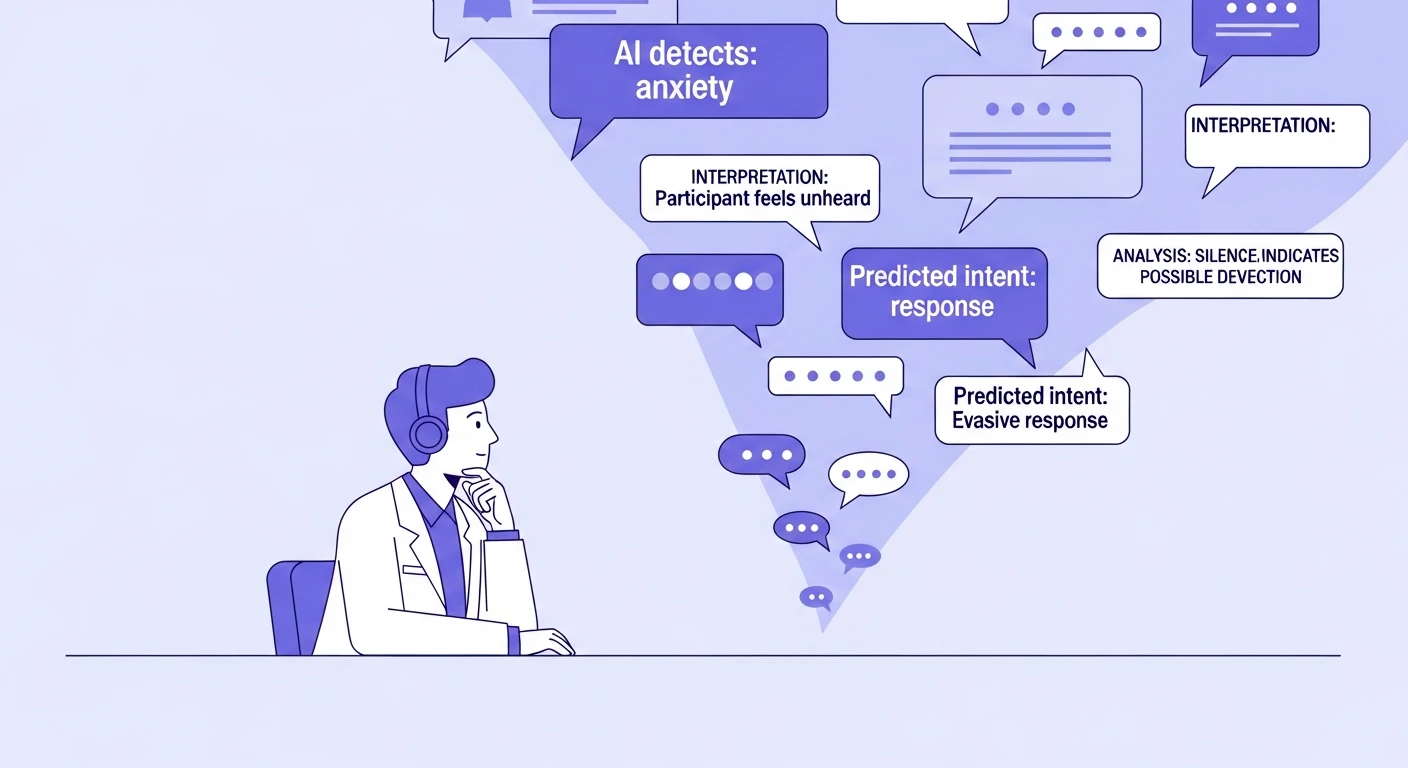
AI transcription and auto-coding eliminate this immersion. The researcher reviews a pre-processed output rather than engaging with raw data. They evaluate machine-generated codes rather than constructing meaning from text. The cognitive work shifts from sense-making to quality assurance -- from "what does this mean?" to "did the AI get this right?" These are fundamentally different cognitive operations with fundamentally different learning outcomes.
The Synthesis Compression Problem
Organizational learning happens in the spaces between data collection and decision-making. The debrief after an interview session. The analysis workshop where three researchers argue about what a pattern means. The slow realization over days that two separate findings connect in unexpected ways.
Automated synthesis compresses these spaces to near-zero. Interview ends, AI produces summary, summary enters the repository, researcher moves to next interview. The throughput is impressive. The learning time is gone. What remains is data movement without meaning-making -- the research equivalent of reading headlines without reading articles.
This connects to what happens when AI-native operating models prioritize efficiency without accounting for the human cognitive processes that efficiency replaces. The model works for repetitive tasks but breaks for knowledge work that requires deliberative understanding.
The Decision-Maker Distance Problem
When research was slow and expensive, stakeholders had skin in the game. They attended interviews because each one was precious. They participated in analysis because findings took weeks to produce and they wanted early signal. They debated interpretations because the small number of studies meant each one carried significant weight.
Fast, automated research creates distance. Stakeholders receive processed deliverables -- summaries, theme maps, recommendation decks. They consume research like they consume market reports: skim, extract relevant bullets, move on. The experiential connection to user reality that research is supposed to create gets lost in the efficiency of delivery.
This is precisely the deployment paradox applied to research: massive increases in research capacity have not yet transformed organizational decision-making because the bottleneck was never data production -- it was always human sense-making.
The Velocity Trap Revisited
This paradox extends the research velocity trap from individual study design to organizational research culture. The velocity trap describes how faster discovery cycles produce worse product decisions within a single study. The automation paradox operates at a higher level: how organizational research automation produces worse collective learning across all studies.
The mechanisms compound. Fast individual studies produce shallow findings. Automated processing removes the immersion that would catch the shallowness. Rapid delivery to stakeholders prevents the deliberation that would deepen interpretation. High volume creates the illusion of evidence abundance, reducing the perceived need to engage deeply with any single finding.
Symptoms of the Paradox
The "We Already Researched That" Problem
Teams that produce high research volume often cannot recall what they learned. When someone proposes studying a topic, the response is "we already looked at that" -- but nobody can articulate what was found or how it should inform the current decision. The research was produced but not learned.
The Contradictory Evidence Blindness
Organizations that learn from research develop sensitivity to contradictions: new findings that conflict with prior understanding trigger investigation. Organizations that merely produce research accumulate contradictions without noticing them because no human has maintained enough contextual awareness to detect the conflict.
The Recommendations Recycling
When organizational learning is working, research recommendations evolve over time -- building on prior findings, refining understanding, advancing the organization's model of its users. When the automation paradox is active, recommendations repeat. Studies surface the same themes quarter after quarter because the organization never truly absorbed the prior findings deeply enough to move past them.
The Insight Graveyard
Research repositories grow while research impact stagnates. Thousands of coded segments, hundreds of synthesized findings, dozens of research reports -- all accessible, all searchable, none actively informing decisions. The research synthesis debt accumulates not because synthesis is not happening, but because automated synthesis without organizational learning is just organized storage.
Breaking the Paradox
Reclaim Immersion Time
Deliberately build immersion back into automated workflows. Even when AI handles transcription and initial coding, require researchers to spend unstructured time with raw recordings. Not to check the AI's work -- to develop the intimate familiarity that enables pattern recognition humans cannot delegate.
Practically: for every study, researchers should spend at least 30% of their time in direct contact with raw data, not processed outputs. This is not inefficiency -- it is the learning investment that makes everything else valuable.
Create Deliberation Rituals
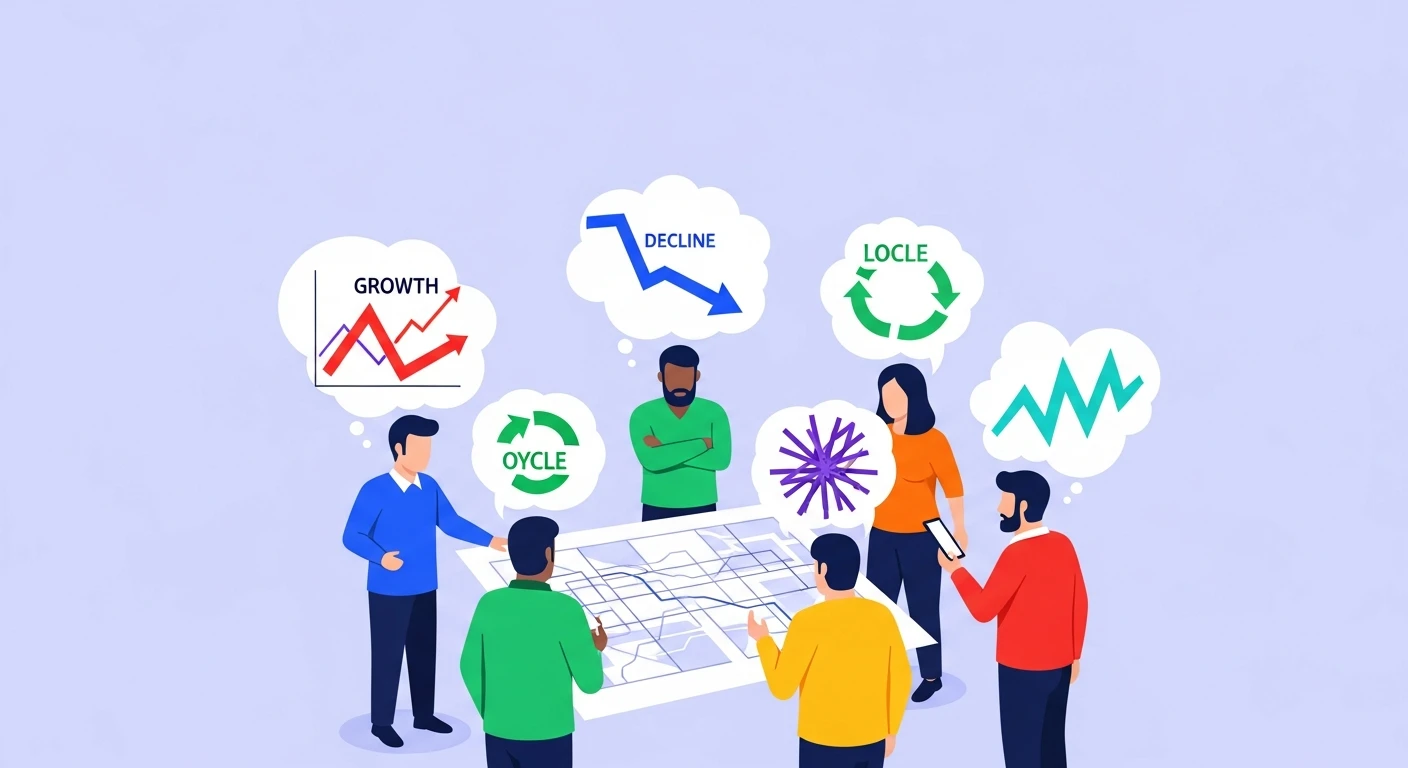
Replace the time saved by automation with structured deliberation rather than more production. If AI saves four hours on transcription, spend two of those hours in team discussion about what the interviews mean -- not what they say, but what they mean for the product, the strategy, the team's understanding of users.
These rituals should include stakeholders. Not as recipients of finished deliverables, but as participants in meaning-making. The stakeholder who argues about interpretation learns more than the one who reads a summary.
Measure Learning, Not Production
Replace throughput metrics with learning metrics:
- Decision citation rate: How often are research findings referenced in decision documents?
- Recall accuracy: Can team members accurately describe key findings from studies completed three months ago?
- Contradiction detection: When new findings conflict with prior research, how quickly is the conflict identified?
- Recommendation evolution: Are research recommendations building on prior work or repeating it?
These metrics are harder to measure than interview counts. That difficulty is informative -- it reflects the genuine complexity of organizational learning versus the false simplicity of production metrics.
Strategic Automation
Automate the parts of research that do not require human cognition for learning: scheduling, transcription, data organization, repository management. Do not automate the parts that are learning itself: interpretation, synthesis, deliberation, stakeholder communication.
The distinction is not about what AI can do -- it can do synthesis passably. It is about what humans need to do for organizational learning to occur. Delegating sense-making to machines is not efficiency; it is outsourcing the very activity that makes research valuable.
Slow Research Sprints
Periodically run deliberately slow research: one study, deeply analyzed, extensively discussed, carefully integrated. Not because fast research cannot produce good data, but because slow research forces the organizational learning behaviors that fast research allows teams to skip.
Think of it as research strength training. The slow, heavy work builds the interpretive muscles that make fast research more effective -- because the team maintains the analytical fitness to actually learn from high-velocity data production.
Practical Takeaways
- Distinguish production metrics from learning metrics. Interviews completed is production. Decisions improved is learning. Optimize for the latter.
- Protect immersion time. Automation should free time for deeper engagement, not just more production.
- Build deliberation into workflows. If nobody argues about what research means, nobody is learning from it.
- Include stakeholders in meaning-making. Delivering findings is not the same as building understanding.
- Run periodic slow research. Deliberate slowness builds interpretive capacity that fast research cannot.
- Audit for the paradox. If research volume increases while decision quality does not, automation is serving production, not learning.
- Automate selectively. Delegate logistics to machines. Keep sense-making with humans.
The research automation paradox is not an argument against AI in research. It is an argument for intentionality about what we automate and what we protect. Speed in data production is valuable. Speed in organizational learning is incoherent -- understanding takes the time it takes, and no algorithm can compress the human cognitive work of making meaning from ambiguous qualitative data.