The rise of ChatGPT has transformed how people interact with AI. From drafting emails to brainstorming ideas, it's become a go-to tool for millions. Naturally, researchers have started asking: "Can I use ChatGPT for qualitative research?"
The short answer is: you can try, but you shouldn't rely on it. Here's why.
The Fundamental Problem with General-Purpose AI
ChatGPT is designed to be helpful across thousands of use cases. It's a generalist. And while that flexibility is powerful, it creates significant limitations when applied to rigorous qualitative research.
No Research Methodology Built In
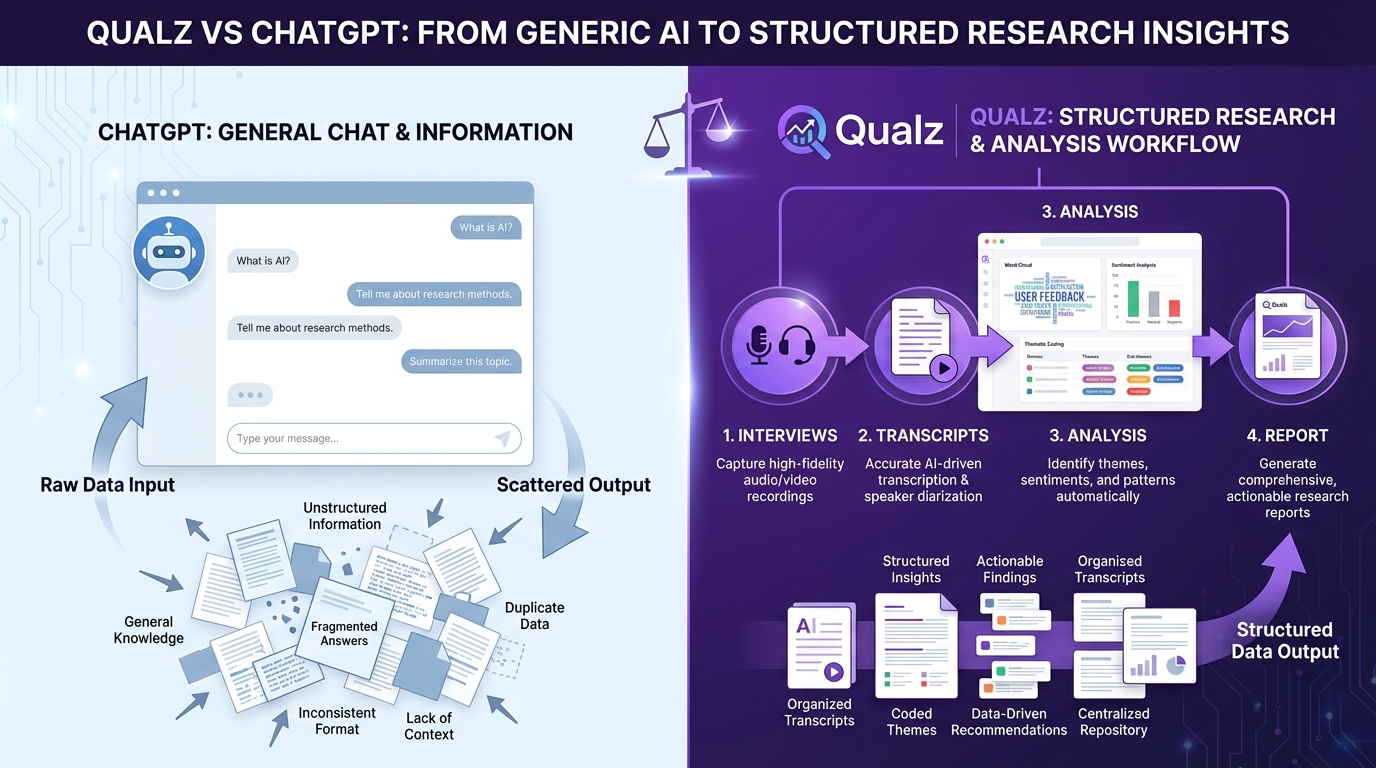
When you paste interview transcripts into ChatGPT and ask it to "find themes," you're essentially asking it to guess what might be interesting. There's no grounded theory framework. No systematic coding process. No auditability of how it arrived at its conclusions.
Qualitative research has evolved over decades precisely because ad-hoc analysis leads to unreliable insights. Methods like thematic analysis, open coding, and framework analysis exist to ensure rigor and reproducibility.
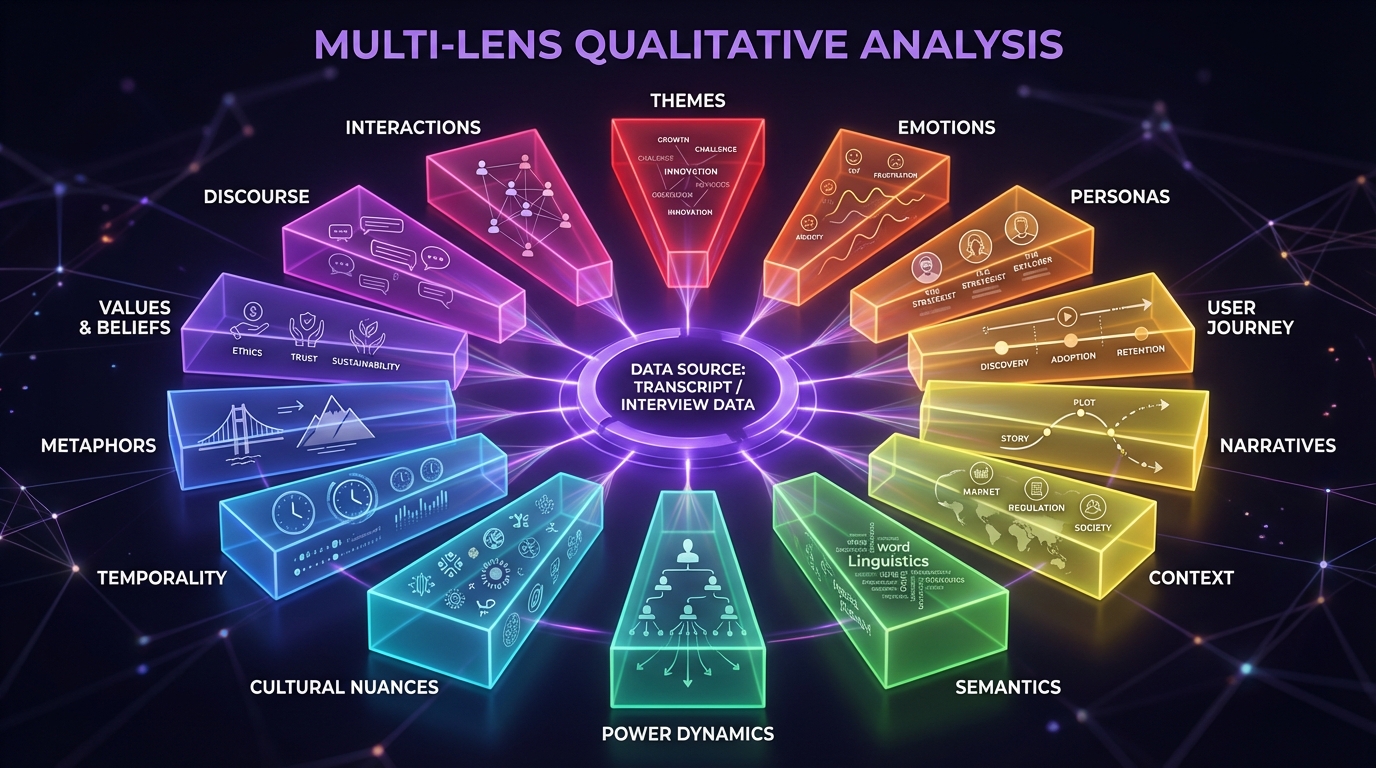
Qualz.ai, by contrast, is built around these methodologies. When you run analysis, you're not getting AI's best guess—you're getting structured output from 14 validated qualitative lenses, each designed to surface specific types of insight.
No Audit Trail
In professional research, being able to trace how you arrived at a conclusion is non-negotiable. Whether you're presenting findings to stakeholders, defending methodology in peer review, or meeting compliance requirements, you need documentation.
ChatGPT conversations disappear into a chat history. There's no way to systematically track which quotes led to which codes, how codes were grouped into themes, or how themes evolved as you analyzed more data.
With Qualz.ai's analysis tools, every code is linked to its source quote. Every theme shows its supporting evidence. You can export the complete analytical trail for documentation or audit.
No Participant Management
Qualitative research involves managing consent, scheduling, compensation, and data protection for every participant. ChatGPT knows nothing about your participants—and that's a problem.
When you paste participant data into a general AI tool, you're potentially exposing sensitive information to third-party systems with unclear data handling practices. There's no consent management, no anonymization controls, no way to ensure GDPR or IRB compliance.
A purpose-built platform handles the entire participant lifecycle: recruitment, consent, data collection, secure storage, and compliant analysis—all in one auditable system.
What ChatGPT Gets Right
Let's be fair: ChatGPT isn't useless for research-adjacent tasks.
Good uses for ChatGPT in research:
- Brainstorming initial research questions
- Getting quick summaries of publicly available literature
- Drafting interview guide questions for human review
- Explaining research concepts in plain language
Poor uses for ChatGPT in research:
- Primary data analysis
- Identifying themes from proprietary interview data
- Generating findings for publication or decision-making
- Handling any data with privacy requirements
A Side-by-Side Comparison
| Capability | ChatGPT | Qualz.ai |
|---|---|---|
| Data collection (interviews, surveys) | No | Yes |
| Structured coding methodology | No | Yes (14 lenses) |
| Quote-to-code traceability | No | Yes |
| Participant management | No | Yes |
| GDPR/compliance controls | Limited | Yes |
| Export for audit | No | Yes |
| Multi-analyst collaboration | No | Yes |
| Reproducible analysis | No | Yes |
The Real Risk: Unverifiable Insights
The most dangerous outcome of using ChatGPT for qualitative analysis isn't getting wrong answers—it's getting answers you can't verify.
When a stakeholder asks, "How do you know customers feel this way?" you need to point to evidence. When a peer reviewer asks about your analytical process, you need documentation. When legal asks about data handling, you need compliance records.
ChatGPT gives you none of this. You get confident-sounding outputs with no way to trace their origin.
When to Use What
Use ChatGPT for:
- Early exploration and ideation
- Tasks where you don't need traceability
- Publicly available information
- Draft content that humans will review and edit
Use Qualz.ai for:
- Actual qualitative research projects
- Anything requiring compliance or auditability
- Primary data collection and analysis
- Findings that will inform decisions or publications
The Bottom Line
ChatGPT is a remarkable technology, but it's not a qualitative research platform. Using it as one creates risk for your research quality, your compliance posture, and ultimately your credibility.
Purpose-built tools like Qualz.ai exist because qualitative research has specific requirements that general AI doesn't address. When the insights matter, use the right tool for the job.
Ready to see how purpose-built qualitative research AI works? Request a demo and experience the difference.