Your Research Repository Is Rotting
Somewhere in your organization, there is a research repository with hundreds of insights. User interviews from last year. Journey maps from two quarters ago. Competitive analysis from before your top competitor pivoted their entire positioning.
Product teams are citing these findings in PRDs. Designers are referencing them in critique sessions. Executives are using them to justify roadmap bets worth millions.
And a meaningful percentage of those insights are wrong -- not because the research was bad, but because the world moved.
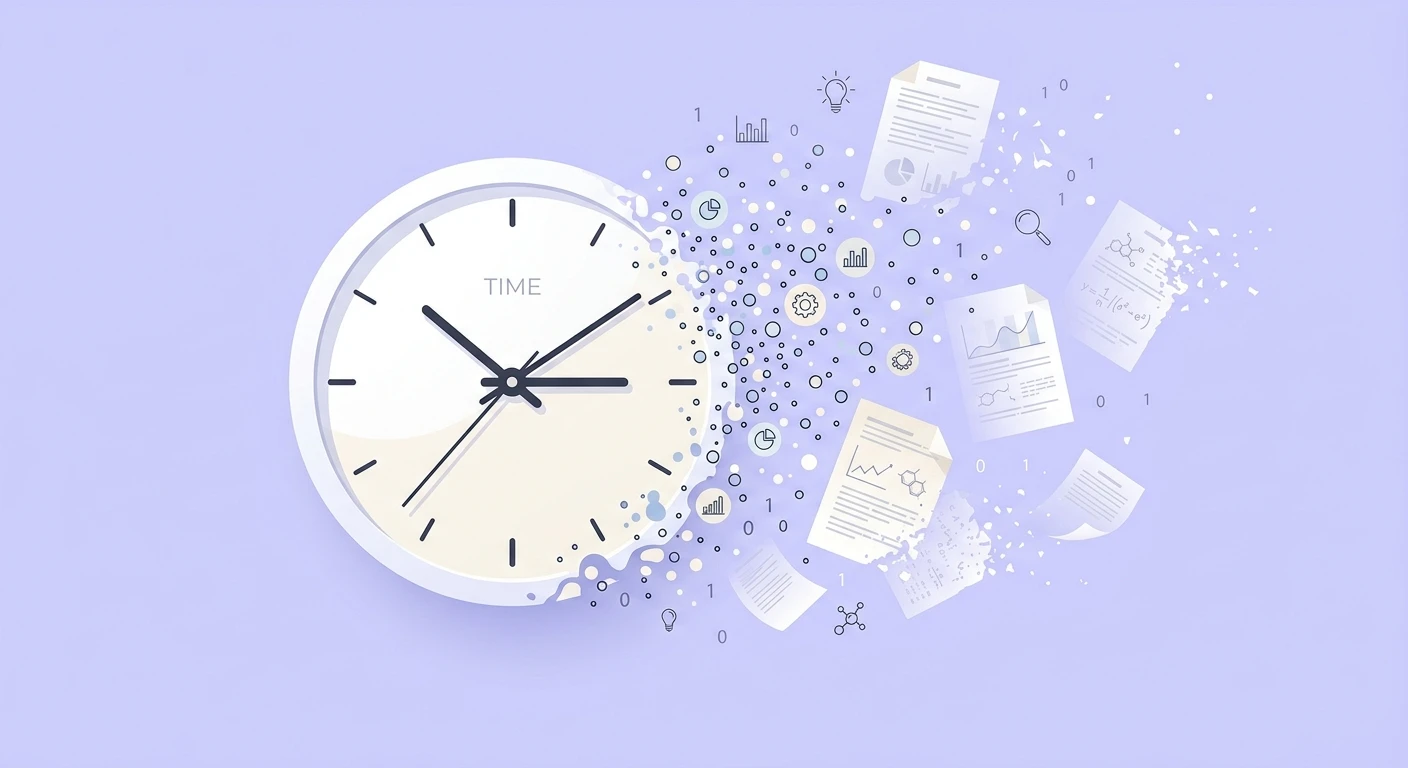
This is insight decay: the gradual degradation of research validity as the conditions that produced those findings change. It is arguably the most expensive hidden cost in product organizations, and almost nobody is measuring it.
The Real Cost of Stale Insights
When a product team makes a decision based on outdated research, the failure mode is insidious. The insight feels authoritative because it came from real research with real participants. It has quotes. It has synthesis. It looks like evidence.
But the user segment that expressed a preference for feature X eighteen months ago has since adopted a competitor that solved the problem differently. The market dynamics that made pricing model Y viable shifted when three new entrants launched freemium alternatives. The workflow pain point your team documented in detail was quietly resolved by an integration your company shipped six months after the study.
The cost compounds because stale insights do not announce themselves. They sit in your repository looking exactly like fresh ones. Product managers find them through search, see that they answer the question they are asking, and proceed with confidence -- confidence that is no longer warranted.
One CPG company discovered that 40% of the customer segments they were targeting with new product development had meaningfully shifted their preferences within 14 months of the original research. The product development cycles were 18 months. They were systematically building products for customers who no longer existed as described.
Which Insights Decay Fastest
Not all research has the same shelf life. Understanding the decay rates of different insight types is the first step toward managing the problem.
Fast Decay (3-6 months)
Competitive positioning insights decay fastest. In markets with active investment and rapid iteration, competitive landscapes can shift within a single quarter. That competitor matrix you built is already inaccurate. Feature gaps you identified have been closed. New entrants have appeared.
Pricing sensitivity data decays almost as quickly, particularly in B2B markets where economic conditions, budget cycles, and vendor consolidation continuously reshape willingness-to-pay.
Channel preference data has shortened its shelf life dramatically. Where users discover products, how they evaluate them, and which touchpoints influence decisions are shifting as platforms rise and fall, algorithm changes redirect attention, and generational differences in media consumption accelerate.
Medium Decay (6-18 months)
Usability findings have moderate shelf life. Core interaction patterns are relatively stable, but as design conventions evolve and users become more sophisticated, what constituted a usability issue last year may be a non-issue today -- or a new pattern may have created friction that did not previously exist.
Workflow and process insights decay at medium rates. How people work changes as tools evolve, teams restructure, and remote or hybrid work norms continue to shift. The workflow you mapped 12 months ago may have three new tools inserted into it.
Slow Decay (18+ months)
Core motivations and values are the most durable insights. Why people want to feel safe, successful, connected, or in control does not change quickly. These foundational insights can anchor research programs for years.
Mental models about how a domain works decay slowly but do decay. As technology literacy increases and new paradigms gain mainstream adoption, the conceptual frameworks people use to understand a category evolve.
The practical implication: if your research repository does not tag insights by type, you cannot apply appropriate freshness expectations. Every insight gets treated as equally valid regardless of its decay profile.
How Continuous Discovery Programs Combat Decay
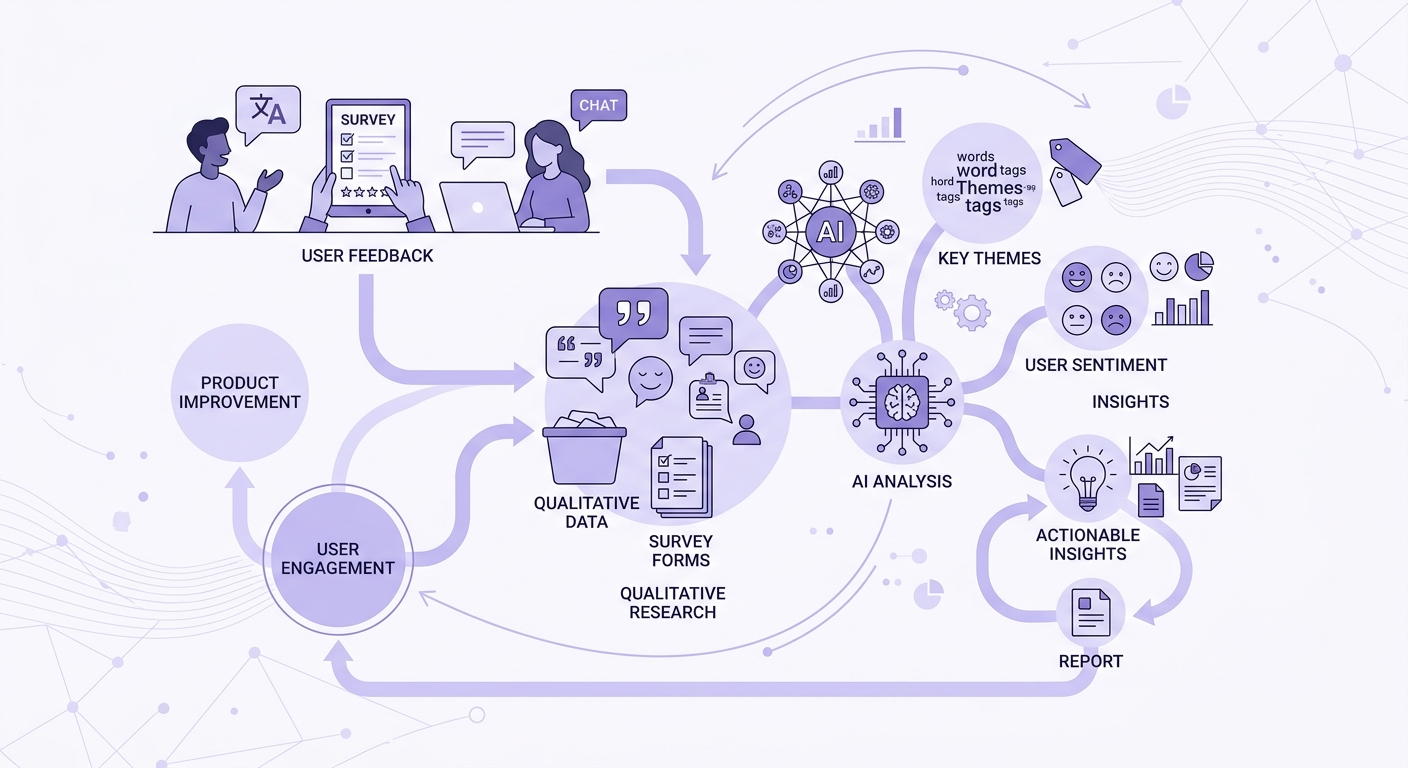
The most effective defense against insight decay is not conducting bigger studies less frequently -- it is building a continuous research cadence that refreshes your understanding incrementally. The distinction between continuous discovery and project-based research is not just methodological; it is an insight preservation strategy.
Continuous discovery programs combat decay through several mechanisms:
Rolling validation. When you are talking to users every week, stale insights surface naturally. A participant contradicts something in your repository, and that triggers a review. This organic correction mechanism does not exist when research happens in quarterly bursts.
Signal detection. Continuous programs detect shifts early. You notice that the third participant this month has mentioned a workflow change, or that sentiment toward a feature has shifted. These early signals let you update insights before major decisions are made on outdated data.
Incremental refresh. Rather than re-running entire studies, continuous programs update specific insights as new data arrives. The repository stays current through steady maintenance rather than periodic overhauls.
Teams running continuous discovery programs report that their confidence in repository insights runs 2-3x higher than teams relying on periodic project-based research. The repository becomes a living system rather than a historical archive.
The Role of AI in Keeping Research Repositories Fresh
Manually auditing a research repository for stale insights is impractical at scale. A mature repository might contain thousands of tagged findings across hundreds of studies. No human team can systematically assess freshness across that volume.
This is where AI creates genuine leverage -- not in replacing research judgment, but in automating the detection of potential decay.
Temporal flagging. AI can automatically flag insights that have exceeded their expected shelf life based on insight type. Competitive insights older than six months get surfaced for review. Pricing data older than a quarter triggers a validation prompt.
Contradiction detection. When new research enters the repository, AI can identify conflicts with existing insights. If a recent interview contradicts a finding from eight months ago, the system surfaces both for researcher review rather than letting them coexist silently.
Market signal integration. AI can monitor external signals -- competitor announcements, market reports, regulatory changes, technology launches -- and flag repository insights that may be affected. When a competitor launches a feature that closes a gap you documented, the relevant insights get flagged automatically.
Usage-based prioritization. AI can track which insights are being referenced in product documents and prioritize freshness reviews for high-impact findings. An outdated insight that nobody reads is low priority. An outdated insight that three product teams cited last month is urgent.
Building a research repository that teams actually use requires that the repository earns and maintains trust. Nothing erodes trust faster than a team discovering they made a decision based on stale data. AI-powered freshness management is becoming a prerequisite for repository adoption.
The principles behind eval-driven development for maintaining quality in AI systems apply directly here -- you need systematic evaluation of insight quality, not just insight quantity.
Practical Strategies for Insight Freshness Scoring
Here is a framework you can implement regardless of your tooling maturity.
1. Tag Every Insight with a Decay Class
When insights enter your repository, classify them:
- Class A (Fast decay): Competitive, pricing, channel, trend-dependent findings. Review every 3-6 months.
- Class B (Medium decay): Usability, workflow, preference, satisfaction findings. Review every 6-18 months.
- Class C (Slow decay): Motivations, values, mental models, jobs-to-be-done. Review every 18-36 months.
This single classification dramatically improves your ability to prioritize freshness reviews.
2. Implement Confidence Decay Scores
Assign each insight a confidence score at creation (typically 0.7-0.95 depending on methodology and sample). Then apply an automated decay function based on the insight class:
- Class A: Confidence drops 15% per quarter
- Class B: Confidence drops 10% per quarter
- Class C: Confidence drops 5% per quarter
When confidence drops below a threshold (say 0.5), the insight gets flagged for validation or retirement. This is not perfect science -- the specific rates will vary by industry and market velocity -- but any systematic approach beats the current default of treating all insights as permanently valid.
3. Build Refresh Triggers
Beyond time-based decay, certain events should trigger immediate freshness reviews:
- A competitor launches a major product or pivots positioning
- Your company ships a significant feature
- A market disruption occurs (regulatory change, economic shift, platform policy change)
- A new study contradicts existing findings
- A product team reports that user behavior does not match repository insights
These event-driven triggers catch decay that time-based scoring misses.
4. Create a Freshness Dashboard
Make decay visible. A simple dashboard showing the distribution of insight freshness across your repository -- how many insights are in each confidence band, which high-impact insights are approaching staleness, which decay classes are overdue for review -- transforms insight management from an abstract concern into a concrete operational practice.
5. Tie Freshness to Context Engineering
As AI-assisted research tools become more sophisticated, the quality of your outputs depends on the quality of your inputs. The principles of context engineering in AI-driven development apply directly -- stale context produces stale outputs. When your AI tools draw on a repository full of decayed insights to generate synthesis, summaries, or recommendations, the decay propagates through every downstream artifact.
The Organizational Shift
Managing insight decay requires a mindset change. Most research organizations are optimized for insight generation -- running studies, producing reports, adding to the repository. Very few are optimized for insight maintenance.
The parallel is technical debt. Engineering teams learned (painfully) that code requires ongoing maintenance, refactoring, and retirement. Research insights are no different. They are organizational knowledge assets that require active management throughout their lifecycle, not just at creation.
The teams that will win in the next few years are not the ones generating the most insights. They are the ones maintaining the highest-quality insight inventory -- a curated, validated, continuously refreshed body of knowledge that product teams can trust without second-guessing.
Start measuring decay. Start scoring freshness. Start treating your research repository as a living system that requires care and feeding, not a filing cabinet that only grows.
Your future product decisions will thank you.