The Seductive Logic of Manual Coding
Every research team has made this calculation: we have smart analysts, we have spreadsheets (or maybe ATLAS.ti or NVivo licenses), and we have time. Why invest in new tooling when we can just... code the data ourselves?
The logic feels airtight. You already pay your analysts. The marginal cost of having them spend a few days coding transcripts appears to be zero. The tools you already own technically do the job. And manual coding gives you that warm feeling of human judgment applied to every data point.
This reasoning is a trap. It ignores at least four categories of hidden cost that, once you actually quantify them, make manual coding one of the most expensive decisions a research operations team can make.
Hidden Cost #1: The Time Math Nobody Does
Let's do the arithmetic that research teams consistently avoid.
A skilled qualitative analyst can code approximately 3-5 pages of transcript per hour when doing rigorous thematic analysis. Not skimming. Not highlighting. Actually applying a codebook, making judgment calls about ambiguous passages, and maintaining consistency with prior coding decisions.
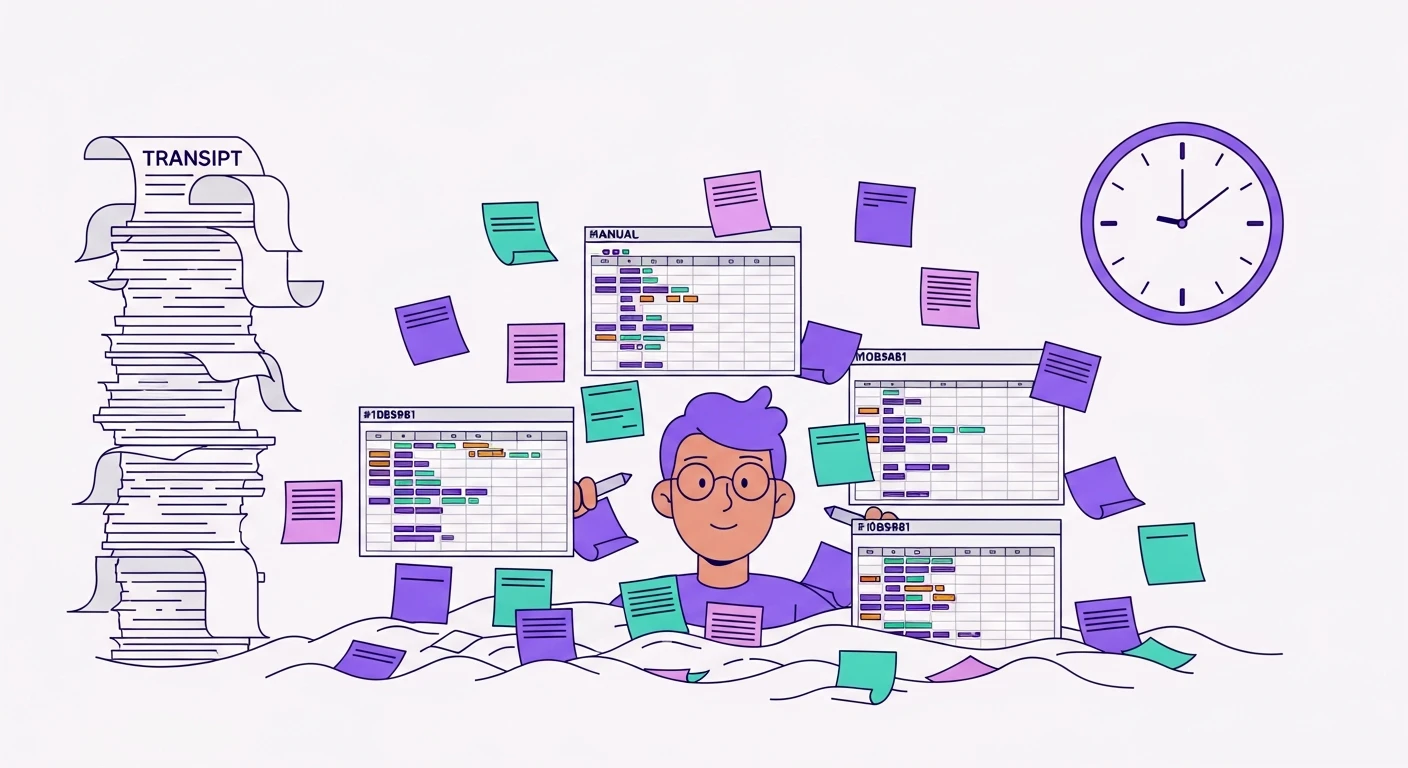
A typical 60-minute interview produces roughly 20-25 pages of transcript. That means one interview takes 4-8 hours to code properly. Not including codebook development, not including reconciliation with other coders, not including the inevitable re-coding when your framework evolves mid-project.
For a modest study of 30 interviews, you are looking at 120-240 analyst-hours just for first-pass coding. At a fully-loaded cost of $75-150/hour for a senior researcher, that is $9,000-$36,000 in labor -- for the coding alone. Not the analysis. Not the synthesis. Not the reporting. Just the mechanical act of applying codes to text.
Most teams never calculate this number because the cost is distributed across weeks and buried inside broader project timelines. It feels like "just part of the work." But that invisibility is precisely what makes it so expensive -- costs you cannot see are costs you cannot optimize.
Hidden Cost #2: Inconsistency Is Not a Minor Annoyance
Inter-rater reliability in qualitative coding is notoriously difficult to achieve and maintain. The academic literature reports Cohen's kappa values between 0.40 and 0.75 for most qualitative coding tasks -- meaning even trained coders disagree on 25-60% of coding decisions.
In practice, the problem is worse than these numbers suggest. Academic studies measure reliability under ideal conditions: trained coders, clear codebooks, dedicated coding sessions. In real research operations, your analysts are context-switching between projects, coding in 30-minute bursts between meetings, and applying codebooks they last reviewed three days ago.
The downstream cost of inconsistency is not obvious until you try to compare findings across studies. When your Q1 study was coded by Analyst A using her interpretation of "user frustration," and your Q3 study was coded by Analyst B using his interpretation, you cannot meaningfully compare frustration levels across quarters. Your longitudinal data is corrupted at the source.
This means every cross-study comparison, every trend analysis, every "how has this changed since last year" question requires re-coding or caveating. The inconsistency tax compounds over time, making your historical data progressively less valuable exactly when longitudinal insight matters most.
Hidden Cost #3: Cognitive Fatigue and Quality Decay
Qualitative coding is cognitively demanding in a specific way that makes sustained performance nearly impossible. It requires maintaining a complex mental model (the codebook and its application rules) while processing novel content (each new passage) and making rapid categorization decisions.
Cognitive psychology research on sustained attention and decision fatigue shows that this type of work degrades predictably. After approximately 45-90 minutes of continuous coding, accuracy begins to decline. Coders start satisficing -- applying the first plausible code rather than the best code. They become anchored to recent decisions, over-applying whatever code they used in the last few passages.
The insidious part: coders rarely notice their own quality decay. Unlike physical fatigue, cognitive fatigue does not announce itself clearly. An analyst at hour six of coding genuinely believes they are maintaining the same standards as hour one. They are not. But the subjective experience of effort masks the objective decline in judgment quality.
This means the last 30% of any coding session is systematically lower quality than the first 30%. For large datasets coded over multiple days, significant portions of your coded data reflect fatigued judgment rather than fresh analysis. You have no way to identify which codes are fatigue-compromised without re-coding -- which just adds more time and cost.
Hidden Cost #4: Opportunity Cost of Slow Insights
This is the cost that never appears on any spreadsheet but often dwarfs the other three combined.
When coding takes weeks, insights arrive weeks late. Product decisions that could have been informed by research get made on intuition instead. Market shifts that your participants described in interviews are not surfaced until the strategic window has closed. Usability problems that could have been fixed in the current sprint are not identified until two sprints later.
The opportunity cost calculation is simple: what is the value of having an insight two weeks earlier? For a product team shipping biweekly, two weeks earlier means the insight informs the current release rather than a future one. For a startup in a competitive market, two weeks earlier means responding to a market signal before competitors do.
Research teams have historically accepted slow turnaround as the price of rigor. But this framing creates a false dichotomy. The real question is not "do we want fast or rigorous?" It is "how much revenue and competitive advantage are we sacrificing by accepting slow as the default?"
The Paradigm Is Breaking at Scale
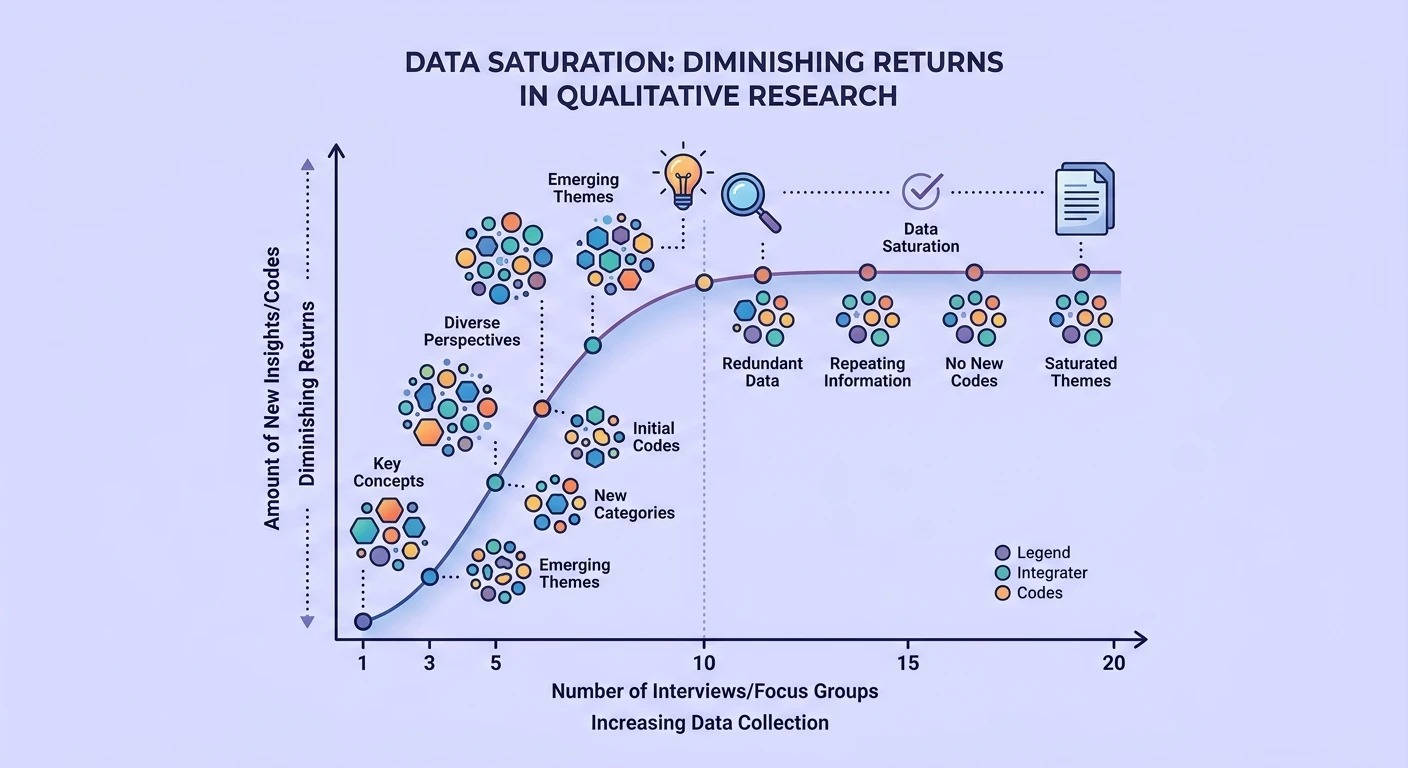
The manual coding model was designed for an era when qualitative research meant 15-20 interviews per study, conducted quarterly. At that scale, the hidden costs remain manageable. Four analysts can code 20 transcripts in a week. Inconsistency across a single study is containable. Fatigue effects across a few days are limited.
But research operations have scaled dramatically. Continuous discovery means weekly interviews, not quarterly. Product-led organizations run multiple concurrent studies. Customer feedback streams generate volumes of qualitative data that would have been unimaginable a decade ago.
At 50+ interviews per month, the manual coding model does not bend -- it breaks. The time cost becomes unsustainable. Inconsistency across multiple concurrent coders becomes unmanageable. Fatigue becomes chronic rather than episodic. And the opportunity cost of month-long analysis cycles becomes competitively dangerous.
What Actually Works Instead
The solution is not "buy AI and fire your analysts." That framing misunderstands what AI-assisted analysis actually does.
The productive framing is: AI handles the mechanical pattern recognition that humans do poorly at scale (consistent code application, exhaustive coverage, rapid processing), while humans focus on the interpretive work that AI does poorly (framework development, meaning-making, strategic implication, contextual judgment).
This is not about replacing human judgment. It is about stopping the waste of human judgment on mechanical tasks that do not actually require it. A senior researcher spending six hours applying codes to text is like a surgeon spending six hours filing insurance paperwork. The skill exists, but it is catastrophically misallocated.
The research teams getting this right are not choosing between manual rigor and automated speed. They are using automation to achieve both: consistent coding at speed, with human oversight focused on the judgment calls that actually benefit from human expertise. The result is faster insights that are also more consistent -- not a tradeoff, but an escape from a false dichotomy that the industry accepted for far too long.
The Real Question
If you run a research operations function, the question is not whether manual coding is expensive. It is. The question is whether you have actually calculated how expensive, or whether you have been accepting the cost because it felt inevitable.
Do the math. Multiply your analyst hours by your fully-loaded cost. Add the rework from inconsistency. Discount your historical data by your actual reliability metrics. Estimate the value of insights delivered weeks earlier.
The number will surprise you. And once you see it, the "economy" of DIY coding stops looking economical.
The manual coding paradigm is not wrong. It is simply the most expensive way to get qualitative insights -- it just hides the expense well enough that most teams never notice.